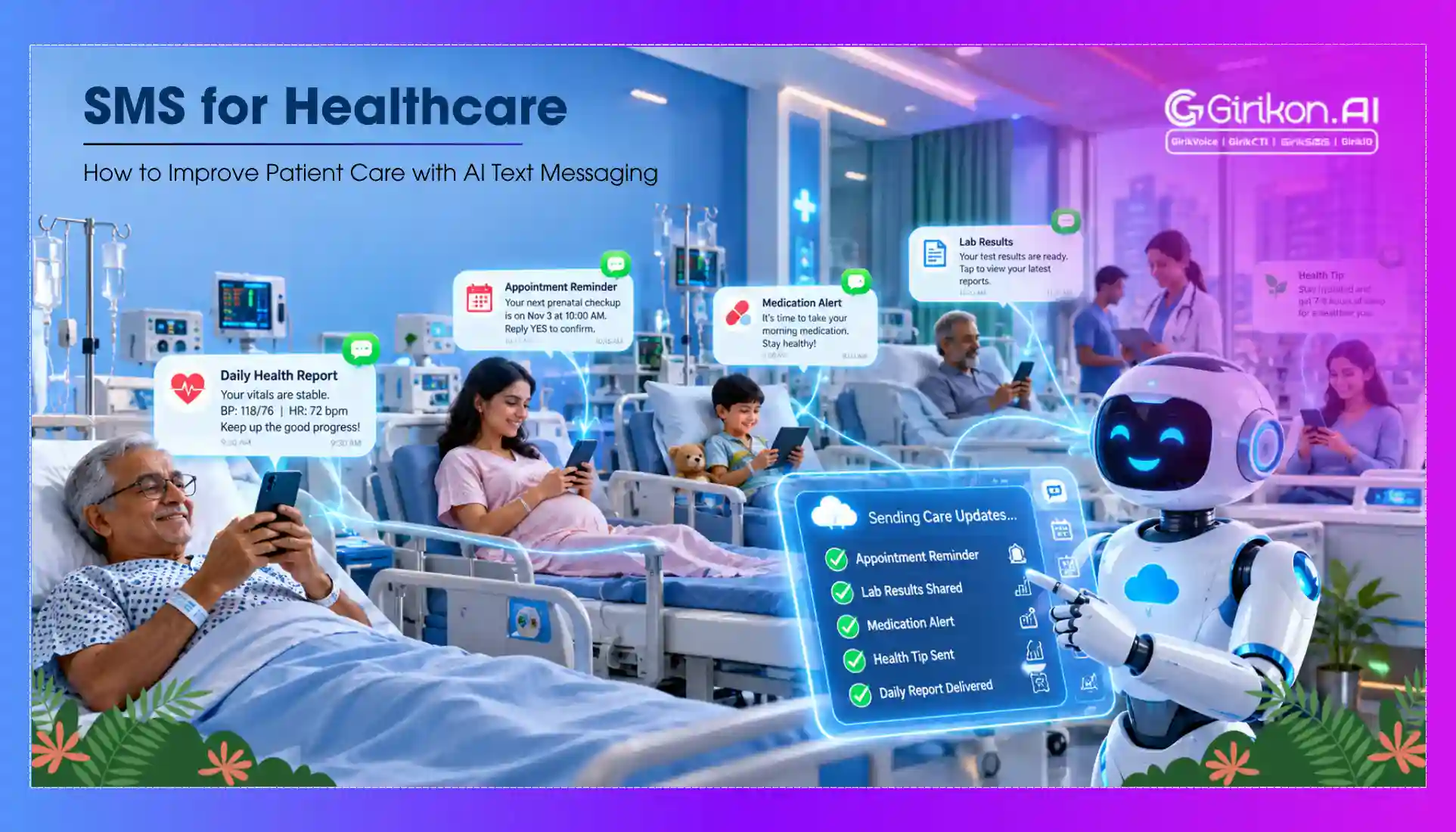
SMS messaging provides a huge opportunity for healthcare organizations to enhance patient engagement, satisfaction, and overall patient health outcomes. Texting today is the world's most preferred mode of communication by people across all age groups. If your healthcare organization uses Salesforce to manage patients, you need a native Salesforce SMS app to leverage the limitless capabilities of your CRM.
Text messaging has become an integral part of our daily lives, and SMS has become an essential component of modern communication. Texting is the easiest way to establish communication. SMS remains a popular and reliable messaging technique despite the availability of other platforms and apps like Facebook Messenger and WhatsApp. This is because SMS is compatible with almost all mobile devices and platforms.
SMS Benefits in Healthcare
Consumers of healthcare today are mobile-first. Extensive research on patients' use of mobile technology reveals that most want to use their smartphones more frequently to manage their health and correspond with healthcare professionals.
When it comes to communication, SMS has shown to be very successful. SMS messages have a stunningly impressive read rate of 98% which makes it an ideal communication platform.
Your patient outreach and activation initiatives will reach a wider audience and be more successful in motivating patients to respond to your communications if you use SMS messaging. You will be able to reach more of your patients by text than any other digital channel, and you can better encourage immediate action because most healthcare organizations have mobile phone numbers on file for patients. The result is greater capacity utilization across service lines.
The Growing Role of SMS in Healthcare Communication
SMS is emerging as a preferred channel of communication in various sectors including the healthcare industry. Listed below are some compelling reasons that make it a must have:
- High engagement: With a high open rate, most SMS messages are read within minutes after being sent.
- Ease of Accessibility: Every patient owns a mobile phone. Patients can access critical details easily irrespective of their location or age.
- Quick and Efficient: SMS is significant for time-sensitive updates due to its instant delivery.
- Ease of Usage: Patients neither require remembering a password nor downloading any App. This makes it easy for them to stay connected.
Challenges in the Healthcare Industry without Salesforce SMS Apps
The modern healthcare industry is not as efficient and productive as it should be; rather, it is like an overburdened system for life support. Moreover, in this era when almost every industry is adopting automation and AI, the majority of hospitals and clinics continue to rely on outdated and unwieldy infrastructures. This results in continual frustrating experiences caused by scattered patient data, missed diagnoses, and delayed treatments.
The healthcare sector frequently faces multiple challenges that compromise the quality of care and lead to an increase in medical errors. One of the major consequences of these challenges is patient dissatisfaction, while another is the overall inefficiency of operations.
Fragmented Patient Data
Due to the lack of coordination among different segments of the current healthcare system, the smooth exchange of clinical data is often hindered. This fragmentation leads to several challenges, including redundant testing, suboptimal clinical decisions, and incomplete medical records. Moreover, essential information, like appointment confirmations, medication reminders, and lab results, tends to get lost and take longer due to a lack of connection between the different tools. Consequently, healthcare organizations face a dilemma in encouraging patients to promote effective care coordination and meaningful patient involvement.
Lack of Interoperability
Most healthcare systems operate on isolated EHR systems that don’t communicate effectively with each other. This results in incomplete or outdated patient information. Further, standard SMS tools cannot access or update protected health data. This lack of synchronization means healthcare professionals often send messages without full context—such as appointment details, patient preferences, and treatment history—leading to reduced engagement.
Regulatory Compliance
To begin with, third-party or custom-built SMS apps lack administrative controls and encryption standards, which are necessary to meet healthcare regulations such as GDPR and HIPAA. The GDPR requires explicit patient consent for data processing, and an SMS opt-in does not meet this requirement. Moreover, the applications do not usually come with secure workflows for the proper handling, retrieval, and safe elimination of patient message records.
Manual Appointment Reminders
Manually created and sent appointment reminders are susceptible to mistakes and inefficiencies. Not only do they exacerbate the issue of scattered information, but they also slow down the provision of patient care. Staff spend valuable time calling and emailing each patient, which results in scheduling conflicts, no-show rates, and missed communication. Additionally, this creates frustration among team members who track excessive time for each appointment.
Slower Pace of Technology Implementation
Doctors and nurses are already overwhelmed by heavy and urgent workloads, and they find it challenging to work with non-integrated communication tools, especially in complex processes. In the absence of a common Salesforce SMS app, the teams would have to handle multiple communication systems, each with their own interface and login. The very thought of disrupting the current system is one of the factors that make the transition to an efficient digital communication system even slower. Thus, the consistency of patient engagement is lost, making it difficult for organizations to maximize the benefits of healthcare technology.
Data Breaches
Using unencrypted and poorly managed third-party messaging services poses risks, including accidental data leaks, unauthorized access, and exposure of confidential patient information. Additionally, such messages may contain protected health information, increasing the risk of minor security lapses that could lead to GDPR or HIPAA violations. This risk undermines patient privacy, damages trust in the organization and makes tracking message delivery challenging.
No Automated Follow-Ups
In the absence of the Salesforce SMS app, patient follow-ups often rely on inconsistent communication channels and manual outreach. Healthcare teams individually call or email patients for test results, post-visit care and treatment reminders—this makes the process time-consuming and prone to delays. Hence, patients are often unable to follow their care plans prescribed by doctors until the end of the day. This, in turn, weakens patient engagement and affects health outcomes across the board.
Customer Journey Management
Due to reliance on manual setup, healthcare institutions encounter obstacles in managing and customizing the patient’s journey from initial appointment to continuous care. Without a central point of tracking and automation in place, communication happens through various disconnected tools—emails, phone calls, and basic SMS apps—making it difficult at times to deliver reminders, updates, and wellness messages throughout the care process. Consequently, patients get limited engagement, fragmented communication, and interrupted journeys.
24x7 Client Support
Providing continuous patient support is important in healthcare, as inquiries can arise at any time. However, without Salesforce SMS automation, healthcare teams depend on limited office-hour operations and manual communication methods. Basic SMS tools lack automated responses, intelligent routing and real-time notifications, making it challenging to send critical updates after hours or handle urgent patient queries. The communication delay hurts treatment adherence, patient trust, and satisfaction levels.
Operational Precision and Data Accuracy
Separate tools manually sending updates between various departments can lead to delays, repeated messages, and conflicting information. This brings difficulties in maintaining consistency and accuracy across patient communications. Moreover, it confuses patients and leads to errors in care coordination and reporting. Furthermore, healthcare providers have no way to confirm if the right message is delivered to the right person at the right time. As a result, healthcare professionals cannot really ensure timely, reliable, and compliant communication across the patient's journey.
To enhance patient engagement, healthcare organizations should use omnichannel messaging solutions for seamless communication.
HIPAA Compliance
There are requirements that must be fulfilled in order for text messages containing protected health information to be HIPAA compliant. This covers technological safety precautions like:
HIPAA Safeguards for Healthcare SMS
- Encrypting messages in transit to prevent interception on public Wi-Fi networks.
- Monitoring and logging all messages to enable message-tracking to the sender.
- Automating message-sending technology's log-off processes to prevent unwanted access.
- Having the option to retrieve messages in case they are inadvertently sent to the incorrect recipient.
Maintaining HIPAA compliance is difficult and may not apply to businesses of various sizes and service offerings in the same way. Prior to sending any communications, make sure you always get advice from a messaging compliance specialist.
The Role of Messaging in Promoting Medication Adherence and Appointment Attendance
In a world where juggling work and personal commitments is a constant, it's not surprising that individuals miss meetings and appointments. Even while some of these lost opportunities might not have much of an effect, missed medical appointments may have a negative effect on our own health.
It costs doctors an average of $200 every time a patient does not show up. And with a 30% average no-show rate throughout the country, it adds up to an astounding $150 billion in annual costs in the United States alone. Considering the wealth of technology and cutting-edge digital tools at our disposal, one might wonder why this problem is still so pervasive. Illness or medical condition diagnosis received too late could be completely different from an early diagnosis if a visit to a doctor visit is missed. This could prevent potential health risks for patients. Not only that, an ineffective scheduling process can create chaos and raise stress levels for an already overwhelmed healthcare staff, administrators, and doctors.
Here are some useful tips for healthcare organizations to address the large problem of missed appointments:
Give patients a streamlined experience in managing appointments
Industry data indicates that an astounding 88% of appointments are scheduled via a voice conversation over the phone. This comes as a total surprise when almost everyone has access to a smartphone and can interact digitally with service providers. Whether it is ordering food, booking a flight, scheduling car repair, or ordering a gift for someone in seconds, today’s consumers want quick and easy engagement in all areas of their lives. And healthcare can't afford to be left behind. Consumers increasingly expect healthcare organizations to provide this level of ease when it comes to scheduling and managing medical appointments.
However, almost 2 out of 3 patients (65%) say they face challenges when they try to interact with their healthcare provider. While a majority (76%) of patients say that the ability to book, reschedule, or cancel appointments should be easily available online, only a mere 2.5% of appointments today are actually scheduled by patients themselves. Healthcare organizations should provide a system that gives patients a fast and streamlined engagement experience by centralizing scheduling and giving patients access to self-managing appointment services. Furthermore, appointment reminders and notifications should be automatically sent via text and/or email to patients to enable them to mark their calendars accordingly.
Provide smart scheduling to maximize capacity utilization
On average, complex diagnostic processes take about 75 days from referral to appointment. Now that's almost an entire financial quarter. Much of this lengthy process is because of cumbersome manual processes that take up a lot of time for both patients as well as scheduling staff, sometimes even for routine tasks. Healthcare systems can adopt smart, rule-based engines using a centralized database, such as a Salesforce chatbot, to give patients access to any self-scheduling service based on the clinical and operational requirements of the healthcare provider. Such a system can ensure that all medical obligations are met, and all relevant approvals are acquired before the scheduling of an appointment. By implementing a smart and centralized system, healthcare organizations can accurately and efficiently manage appointment scheduling while optimizing capacity utilization and safeguarding revenue.
Provide unmatched convenience
Healthcare systems should focus on minimizing the effort involved for patients to engage with healthcare providers. Eliminating unnecessary steps and challenges mitigates delays in providing care. Healthcare providers can offer convenience by providing patient-friendly experiences throughout the care journey. Instead of managing heaps of paper-based orders, you can adopt a robust digital platform such as Salesforce and send SMS from Salesforce to send these orders electronically to patients. As part of the appointment scheduling process, healthcare organizations need to promptly manage insurance approvals and patients should receive timely appointment reminders to help them stay on track amid their hectic schedules. Patients expect convenience and ease of use and healthcare systems that provide both will secure their position in a fiercely competitive market.
How SMS Messaging Helps in Medication Adherence and Appointment Adherence
Medication Delays and Forgetfulness
A National Library of Medicine survey states that almost half of the patients (49%) find it difficult to take their medications on time as prescribed by their doctor. Additionally, a major element in the lack of adherence is patients' simple forgetfulness and the lack of social support. Thankfully, text messaging is here to help.
Studies on clinical trials that have adopted a text messaging solution have shown that SMS messaging reduces medication delays from 85% to 20%. The study revealed that personalized and timely text message reminders to patients can significantly boost medication adherence, thereby saving costs and translating to a marked improvement in health and illness management.
Reducing No-Shows with SMS Messages
Appointment no-shows may be detrimental to a patient's health. Additionally, they have the potential to severely disrupt workplace productivity, resulting in inefficient use of resources and extended wait times. Patients forgetting appointments is the primary cause, as they become preoccupied with the hectic lifestyles of today. A simple SMS reminder can go a long way to help them stay on course.
SMS messaging not only reduces no-shows but can also ensure that patients arrive on time. A late arrival could cause a chain reaction that disrupts the entire day's plan. Reminding patients by SMS messaging of their upcoming appointment via seven days' notice, twenty-four hours' notice, and the day of the appointment can help assure appointment adherence and timely attendance.
SMS Messaging to Engage Patients
Healthcare organizations can leverage SMS text messaging to check in with patients between appointments. This helps them to stay engaged in their health throughout the care continuum. By setting up automated SMS messaging in your CRM such as Salesforce and using a 100% Salesforce native messaging solution such as GirikSMS, you can save time and resources for your office and keep patients on track. By creating patient segments based on your CRM data and other business rules, you can send personalized, accurate, and timely text messages directly to the patient’s mobile phone.
Asking relevant questions via text is a very effective way to keep patients engaged in their health. Questions such as "Did you complete your 45 minute brisk walk today for your heart health?" or "Did you meditate for 30 minutes today to reduce anxiety?" work very well as interactive check-ins to keep your patients engaged and informed with helpful information and build a bond of trust between patients and caregivers.
SMS Messaging For Healthcare And Program Information
Patients can sometimes get overwhelmed with healthcare information. With SMS messaging, you can help them understand their healthcare plan, their prescriptions, and diagnosis by sending texts with links to helpful information.
Additionally, SMS for healthcare offers simple ways to provide resources and educate patients. Give personalized health advice and medical information about preventive care. Based on the patient's age, gender, and medical history, text messages with useful medical information can be personalized for them.
In many cases, care providers recommend non-pharmaceutical interventions such as exercise, meditation, mental health activities, dietary guidelines, and dos and don'ts which are vital to keep patients on track. These simple SMS texts can provide links to videos or articles to inspire patients and motivate them to stay on track. SMS messaging can send any relevant information to a patient’s mobile device keeping them committed to the program.
Use Surveys to Assess Performance
While SMS messaging can help your patients stay on track in their care journey, there are always areas to improve upon. With text messaging based surveys, healthcare providers can gather valuable information to improve services. With GirikSMS, you can conduct polls, a text-to-vote, or include a web survey link. All of this can be automated with our chatbots to automatically manage the back-and-forth flow of questions and their responses based on patient selections or keyword triggers.
With our two-way bot-powered communication, patients can easily reschedule their appointments. This two-way communication empowers patients and gives them more control in their healthcare journey. This improves appointment slot utilization and enhances clinic efficiency.
SMS Messaging in Healthcare: Use Cases
The ability to diagnose and treat patients more successfully is the most evident and direct advantage of utilizing SMS technology in the healthcare sector. But there are advantages all around, including for your marketing, customer service, internal communications, and administrative departments.
Prescription reminders
When it comes to prescription reminders, there are several ways that SMS messaging can help both patients and healthcare workers. Set up your messages with specific information for each patient, then set them up to automatically notify patients when their prescription is about to run out or when they need to pick up their prescribed medication.
Create new calls-to-action
A lot of patients will require phone follow-ups to gauge their current state of health, sometimes following the prescription of a new drug regimen. You can ask your patients to reply with a simple "YES" via 2-way SMS messaging, informing you that they need to make another appointment. Your patient can reassure you that everything is well and that they are recovering with a simple "No Thank you" response.
Improve internal communication
Because the healthcare sector operates around the clock, there is frequently a dip in communication within the business. SMS notifications can maintain the coherence of internal communication. Notify the medical staff of changes in the schedule, staff meetings, birthdays of employees, emergencies, and much more.
Test result notifications
When test or lab results are available, send SMS notifications to patients so they can receive important information on time. Giving patients the information they require as soon as it is available by providing them with direct alerts when results are in is another excellent technique to reduce patient anxiety.
Certain test results are sensitive, and medical professionals would rather speak with patients face-to-face about them. However, a lot of it is much simpler, and sending patients their results via SMS notifications could save money on communications and administrative expenses.
Deliver pre-op and post-op instructions
Provide patients with useful advice or instructions to assist them in preparing for impending procedures or surgeries. Provide postoperative SMS messages that include details about their plans for recuperation.
Community health alerts
During outbreaks, SMS technology can be used to share critical notifications and instructions, for eg. COVID-19 updates. You may quickly raise general public awareness and inform the community by sending out mass communications.
Personalized Health Recommendations
By assessing patient data, a CRM system delivers health suggestions tailored to meet the unique need of every patient. Such extent of personalization ensures that the suggestion is relevant and impactful for the patients. This system empowers patients to reach their health goals by tracking their progress and offering timely support.
Vaccination campaigns
SMS messaging can be used to make appointments, notify qualified people, and deliver vaccine information during vaccination drives or camps.
Why Salesforce + SMS is a Winning Combination
However, the lack of effortless communication has always prevented healthcare providers from reaching their potential. This is where the need for a robust Salesforce Messaging App arises. Such a messaging App can help engagement across multiple platforms including WhatsApp, SMS, Facebook and more. Besides ensuring seamless communication, such a messaging platform keeps all the email and chat history in a single place. When unified with the Health Cloud platform of Salesforce, SMS messaging offers an efficient way to connect with patients, enhance satisfaction while delivering better outcomes.
Salesforce Health Cloud offers a patient-oriented platform that brings together data, care plans, and communication. When SMS messaging is integrated into Health Cloud, it enhances the platform’s capabilities—enabling providers to elevate patient engagement through direct, timely and personalized communication.
How Salesforce SMS Apps Solve These Healthcare Challenges
While bridging the communication and data gaps that traditional healthcare systems struggle with, Salesforce SMS apps like GirikSMS help healthcare providers deliver patient-centered care powered by intelligence, automation, and real-time insights.
Unified Patient Communication
All patient communications, including lab notifications, appointment reminders, and care reminders, are managed within a single centralized system by the Salesforce SMS applications. This not only solves the problem of communication barriers created by disconnected systems but also ensures that every department, from reception to post-care, can access the same real-time patient data. Consequently, this results in fewer missed updates, smooth coordination, and one connected patient experience.
Interoperable Framework
With the ability to integrate directly with Salesforce Health Cloud, EHR systems, and other medical databases, the Salesforce SMS app ensures healthcare professionals always have a complete and updated patient view before delivering any message. Such a level of data syncing makes the team confident while sharing reminders, treatment updates, and wellness notifications without worrying about missing and outdated information.
HIPAA and GDPR Compliance
Salesforce messaging app like GirikSMS offers in-built compliance features—from audit trails to message encryption, and automated consent management. This ensures that every communication meets GDPR and HIPAA standards. Additionally, it enables providers to quickly find, save, and delete message histories while still having complete control over patient data. Further, it secures each interaction, thus facilitating patient trust.
Automated Appointment Management
Not just GirikSMS lets you send SMS but also automatically handles appointment confirmations, reminders, and reschedules. It updates staff dashboards instantly with confirmation, while providing patients with timely notifications 24 hours and 2 hours before appointments. This reduces staff workload, minimizes no-show rates, and makes the appointment process smooth, convenient, and efficient.
Easy User Onboarding
While eliminating all kinds of complexities, the Salesforce SMS app features intuitive dashboards, guided onboarding, and minimal training requirements. Even before the final stage, the healthcare team can smoothly transition to the new workflow without any disruptions. The single interface is also a contributing factor to the overall acceptance of the software among nurses, doctors, and office workers, as it lessens the time spent on switching systems.
Strengthening Data Security
Built on an enterprise-grade security architecture, GirikSMS prevents unauthorized access and ensures that patient data remains protected across every message exchange. The implementation of end-to-end encrypted messaging, along with multi-level access control and secure authentication protocols, is one of the measures taken to prevent unauthorized persons from gaining access to sensitive health information. Hence, the possibility of breaches is greatly minimized, ensuring complete protection of patient privacy at every stage.
AI-Based Health Tracking and Analytics
One of the features of GirikSMS is the automated SMS workflows, which ensure that every patient receives timely follow-ups, wellness tips, and prescription refill reminders after each appointment. These reminders are tailored according to the patient profiles saved in Health Cloud, thus, not only increasing the patients' compliance but also making the manual outreach unnecessary. Patients also stay in touch with healthcare providers through two-way messaging, which enables proactive support and reduces the risk of missed treatments.
Centralized Patient Journey
Salesforce SMS tracks every patient interaction across their journey from initial consultations to test results and ongoing follow-ups— all in one unified ecosystem. This empowers healthcare teams to communicate in a way that is both journey-based and personalized to each patient throughout the care process. Further, automated triggers within the Salesforce messaging app, GirikSMS ensure that no further step is missed, fostering smoother patient experiences and stronger engagement.
Real-Time Patient Support
Through intelligent bots, automated routing, and real-time notifications, the Salesforce SMS app, like GirikSMS, provides 24/7 engagement. Moreover, it provides patients with instant replies to their queries or urgent updates. This always-on service ensures that no patient issue is left unresolved, even beyond standard working hours. Hence, patients' satisfaction is increased, trust is built, and communication through all the channels is made uninterrupted.
Data Reliability and Uniformity
If the communication is within Salesforce only, updates, notifications, and patient data are unified and accessible across all departments. The system promotes message uniformity, prevents repetition, and streamlines the reporting process. Additionally, it empowers medical personnel to oversee message delivery, measure engagement, and guarantee that every message is sent to the intended recipient at the right moment.
Quantifiable Impact of Salesforce SMS App in the Healthcare Industry
| Metric | Impact | What It Means |
|---|---|---|
| Follow-Up Efficiency | +25% | Automation triggers reminders and post-care messages instantly instead of manual outreach. |
| Operational Efficiency | +20% | Staff spend less time managing reminders and more time on patient care. |
| Missed Appointments | -30% | Automated SMS reminders reduce missed appointments significantly. |
| Communication Errors | -50% | Centralized data minimizes inconsistent updates and manual errors. |
| Patient Engagement | +40% | Personalized two-way SMS keeps patients more engaged in their care journey. |
Mini Case Study: How GirikSMS Transformed Patient Engagement at a Hospital
A healthcare center with a capacity of 200 beds in Bengaluru relied mainly on phone communications and disconnected tools for follow-ups, appointment reminders, and lab notifications. Consequently, the patient's no-show rate reached 28%, and staff members spent countless hours managing appointments and sending updates manually.
Challenge
The improper EHR/CRM integration resulted in missing or delayed critical messages that ultimately caused patient dissatisfaction and low adherence to treatment. They were looking for an automated solution that is compliant, secure, and unifies patient data while improving engagement and communication, without burdening the staff.
Solution
The integration of GirikSMS with Salesforce Health Cloud was the first step toward automating patient communications, and then once the hospital's communications were changed to SMS notifications, the following were personalized and delivered:
- Lab test updates and results synced directly from the EHR
- End-to-end appointment confirmations and ongoing reminders
- Real-time two-way communication to simplify flexible scheduling and support
- Personalized post-consultation messages via care instructions and medication reminders
Moreover, the integration opened the door to HIPAA-compliant messaging, encrypting the entire process and centralizing tracking of all patient interactions.
Results
- Zero compliance violations with in-built consent and data-handling protocols
- 25% reduction in staff workload by automating manual communication tasks
- 50% increase in patient engagement rate via two-way messaging
- 35% decrease in missed appointments, all thanks to automated reminders.
5 Practices to Optimize Patient Care with SMS for Healthcare
Establish trust for effective communication
Effective SMS communication for healthcare is based on trust. Establishing a personal connection and outlining the message's objective helps you start a meaningful conversation with patients.
To do this, start by introducing yourself and addressing the recipients by name. Next, make sure to clearly state the message's goal. This method not only demonstrates that the communication is meant for the appropriate recipient, but it also starts to build a meaningful relationship with the patient by showing that you are concerned about their health and well-being. This will increase the possibility that the patient will take action to improve their health.
Encourage patients to take action
Healthcare messages should encourage patients to act immediately. Give them explicit directions and follow-through support so they can complete desired tasks, such as making appointments or gaining access to resources.
Clickable links can be used with SMS messages which makes it simple to point members toward relevant resources or services. Members can see where they're heading before clicking on a link. These links also allow you to track member-level activity for insightful data that can be accessed in real time.
Personalize your content
In addition to fostering trust, personalizing your messaging enables you to craft messages according to the unique needs of each patient. You can improve engagement and promote positive health outcomes by tailoring messaging content to reflect socioeconomic determinants of health and demographic data.
Adding multimedia components to SMS, live videos, and images, increases patient engagement even further. Visual and narrative communication allows patients to connect with their healthcare provider and comprehend healthcare information more deeply.
Interact in the language of your patients
It might be difficult for health plans to serve a varied clientele who speak different languages. There's no doubt, though, that communicating with your patients in their native tongue is essential to efficient communication. One of the most effective ways to foster positive participation is to speak with patients in the language of their preference.
Check for compliances
Keeping track of opt-ins and opt-outs is required by law making it more than just a best practice.
Make sure rules are followed by swiftly complying with opt-out requests. We've all experienced being overloaded with text messages; occasionally, individuals may respond with "stop" merely because they've had one too many texts that day or because they are unsure of the sender's identity. Make sure you constantly give members the option to re-opt into the communication channel in case they change their minds in order to get around that specific challenge.
Key Features of GirikSMS for Healthcare
Businesses are spoilt for choice when it comes to adopting an SMS messaging solution. So which one do you pick? How do you ensure that you choose one that stands out? The SMS messaging solution from GirikSMS, which is 100% Salesforce native, was created with the specific goal of satisfying the demands of both patients and healthcare practitioners.
Medication adherence is viewed by the World Health Organization as a global issue that requires urgent attention. SMS text messaging, a dated but reliable technology, is starting to show promise as a way to increase appointment and prescription adherence. GirikSMS powered text messaging can be standardized or tailored, can be two-way, and timed to a daily, weekly, or monthly regimen to work as an effective intervention for improvement in healthcare adherence.
Beyond the capabilities above, GirikSMS for Healthcare's salient features comprise:
- Message Scheduling
- Message templates
GirikSMS's SMS marketing tools provide extensive analytics and customized messages to help you boost engagement. In addition to following HIPAA regulations, our platform offers 24-hour assistance and easy consent management.
Improve Patient Communications with GirikSMS-powered Healthcare SMS
Using a healthcare SMS messaging platform can help your organization communicate with patients more efficiently, whether you're searching for a solution for appointment reminders or ways to improve patient care. Reaching a large audience quickly and easily is one of the many benefits of a robust SMS strategy. SMS for Healthcare is a great tool for healthcare businesses, to manage patient care, schedule procedures, share test results, send out emergency alerts, and much more.
While combining Salesforce Health Cloud intelligence with GirikSMS’s communication automation, healthcare providers can overcome long-term standing barriers to fragmented data and manual workflows. Thus, ensuring more connected patients, better healthcare outcomes, and more efficient teams.
As a healthcare provider, you can harness the power of conversational text messaging to make patient non-adherence a thing of the past. With customizable settings, you can adjust your messaging strategy to engage with patients more effectively and enhance communication over time.
Ready to transform your patient engagement?
Connect with the team of GirikSMS or enroll yourself for the free trial of the app and see how you can build a secure and automated communication ecosystem on Salesforce.