What MobileConnect can’t do, how a Marketing Cloud Next migration unlocks native RCS, and when a Salesforce-native messaging app is the faster route.
These days, consumers want to see the sender before opening a message. That's not the experience that MobileConnect can provide. It uses SMS/MMS as its basis, provides limited brand building, and is increasingly being filtered by the carriers. Concurrently, organizations are checking out Marketing Cloud Next while Salesforce further invests in Data Cloud and Flow based engagement. But to fully utilize the platform, you must understand Marketing Cloud Next migration. How it enables native access to RCS capabilities. How do you make the shift? What are common mistakes to avoid? If you also have these questions, then this blog is for you.
This blog covers what is missing from MobileConnect, the entire migration process, and when a Salesforce-native messaging app is a better option.
Why is MobileConnect Being Replaced by RCS?
The major reason it's being replaced is because MobileConnect is based on SMS/MMS foundations. There are limits to it: message format, weak branding, and no means for recipients to positively confirm the sender. In addition, carrier filtering can also impact message delivery, reduce engagement, and create a challenge for regulated industries to be compliant.
RCS offers a different experience instead. Verified sender profiles assist the recipient in figuring out who they were getting text from. RCS makes messaging more interactive. Customers can view products, respond to offers, confirm appointments, and reply to businesses, all this and more without leaving the conversation.
As organizations evaluate RCS, many are also reassessing the long-term role of MobileConnect within their Salesforce messaging strategy. It also raises questions about the future of Marketing Cloud Engagement and the shift toward Marketing Cloud Next.
Is Marketing Cloud Engagement Reaching End of Life?
So far, no date has been announced by Salesforce. Despite this, a lot of organizations are exploring Marketing Cloud Next and its RCS features. Early start means teams have time to resolve dependencies and make changes in time before they become hard to manage.
What is a Marketing Cloud Next Migration?
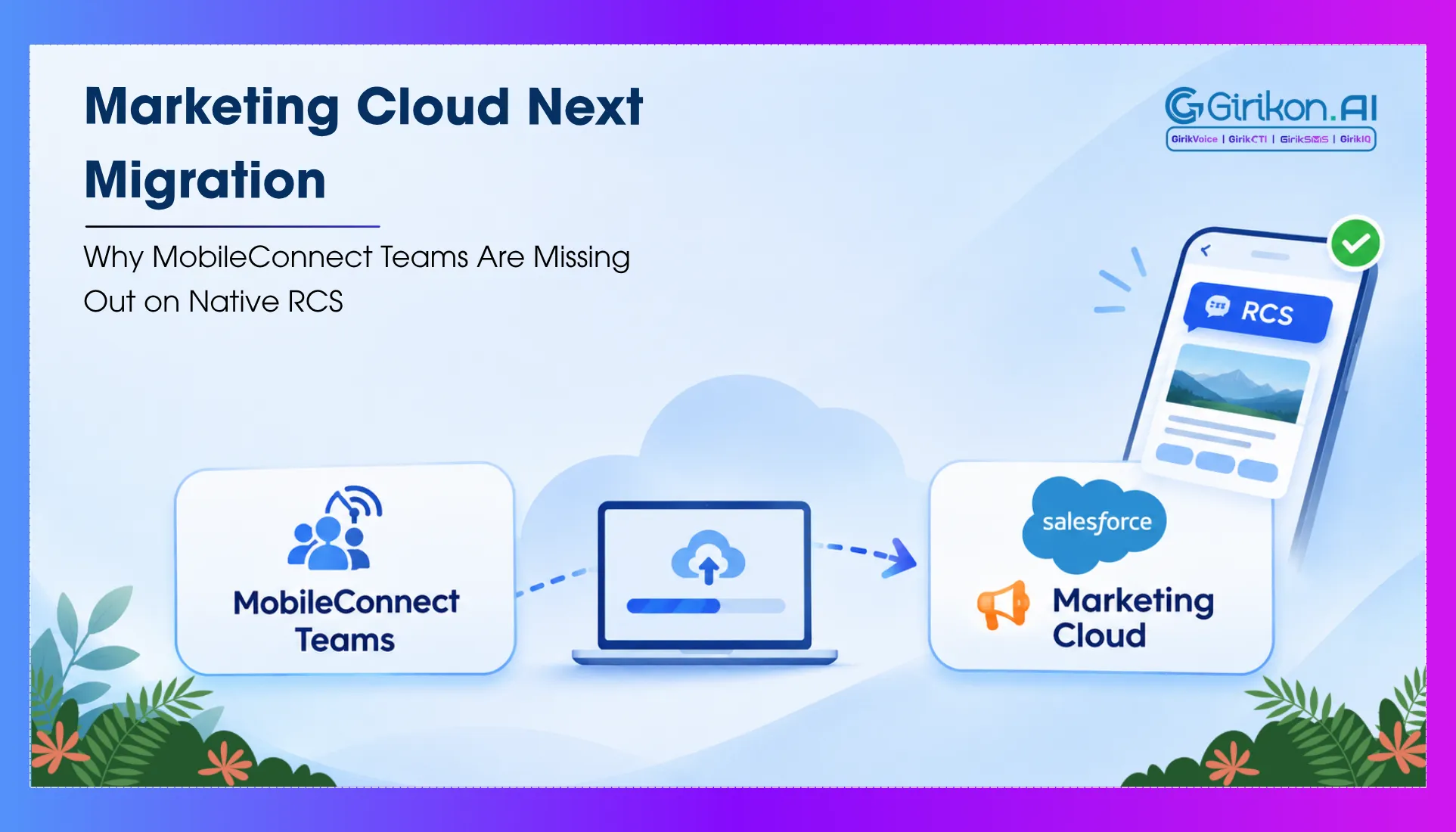
A Marketing Cloud Next migration is the transfer of messaging workloads from Data Extensions and the MobileConnect architecture to Data Cloud and flow. While Flow is used to orchestrate messages and automations, the traditional audience tables get replaced by the unified customer profile – Data 360 profiles.
Customer profiles, orchestration, and messaging all in one architecture is Marketing Cloud Next. Organizations can also run SMS and RCS from a single customer record with the same foundation as native RCS. It's not a "lift and shift" effort. A redesign of data models, journeys, integrations and deliverability processes, often occurs before go-live.
How Does Marketing Cloud Next Migration Work?
Most organizations run existing messaging programs alongside new implementations until testing is complete.
Audit Your Current Messaging
Look at active SMS activities, keyword programs, automations, integrations, and Data Extensions dependencies. This lets teams gain insight into current messaging programs and what parts of those could be impacted during the transition.
Redesign Your Data
Map Datasets to Data Cloud schemas and customer profiles. Also, review existing data structures, resolve duplicate records, and ensure the data needed for customer messaging is available in the new structure.
Rebuild Journeys in Flow
Create Messaging journeys in Flow and RCS builder. First focus on high value customer journeys then customer support journeys. Ensure you test each use case for their performances to reduce the risk throughout the migration.
Register and Verify Your RCS Brand
Begin to register your RCS brand as early as possible. Carrier approval timelines can differ and impact deployment schedules. Doing this step early will help you avoid any delays once native RCS programs are available.
Test for Readiness
Before scaling message volume, confirm message delivery, integrations, reporting, and customer experiences. For teams that are considering any Marketing Cloud Engagement at an end-of-life scenario, this phase should be used to ensure that all rebuilt messaging programs perform as expected.
Cut Over in Parallel
Run legacy and newer messaging processes concurrently until legacy processes are phased out. It enables teams to identify results, solve problems in a timely fashion, and deprioritize the use of the older abilities associated with MobileConnect's future without disrupting customer communications.
Pro Tip: Ensure ownership of data, messaging journeys and compliance activities are well defined prior to implementation.
What Risks Should Teams Plan for in a Migration?
- Complexity and Cost: The redesign of the data, preparation for deliverables, testing, and process changes can extend timelines and can raise costs for the projects.
- Channel Continuity: Active SMS and MMS programs might need special consideration when migrating to ensure proper communication continuity for customers.
- Carrier Approval Requirements: RCS brand verification relies on carrier approval processes, where timely or delayed processes will have an impact on the timeline.
Is a Salesforce-Native Messaging App a Faster Alternative?
A Salesforce-native messaging app may offer a quicker route for organizations that are intent on leveraging conversational messaging for Salesforce, or CRM, records. A native RCS messaging app is directly integrated into Sales Cloud and Service Cloud, meaning there is no need to move any configuration to a platform before they can enjoy the benefit of RCS messaging in the cloud.
Several organizations use a native AppExchange application during their Marketing Cloud Next migration to avoid disrupting customer communications during larger modernization efforts.
One of the native Salesforce messaging solutions is GirikSMS:
- Designed with Salesforce Core using Lightning and Flow
- Supporting two-way SMS, MMS and RCS
- Offers access to contacts, leads, accounts and related records directly
- Removes synchronization delays between platforms
Key Takeaways: Is a Marketing Cloud Next Migration Essential for Native RCS?
Normally, yes for organizations using Marketing Cloud messaging. Native RCS capabilities are linked to the Marketing Cloud Next architecture, whereas MobileConnect is still focused on SMS and MMS. For any business that's seeking the assurance of branding, enhanced interactions, and modern messaging at scale needs a roadmap that goes beyond MobileConnect.
Marketing Cloud Next migration needs a solid strategy across data, journeys, deliverability, and carrier registration. Meanwhile, an RCS messaging app designed for the Salesforce-native can help customers during the transition process—and deliver value right away.
Preparing Your Messaging Strategy for RCS?
Schedule a demo to experience Salesforce-native messaging in your environment.