Discover how virtual queuing and callback solutions are transforming customer service by allowing callers to retain their place in line without waiting on hold. Explore how these technologies reduce frustration, improve customer satisfaction, minimize call abandonment, and help businesses manage call volumes more efficiently while delivering a seamless customer experience.
As a customer, you might have called a bank to seek support for a failed transaction or contacted a technical support team for assistance with a service outage, only to spend your precious time listening to repetitive music followed by a message saying, "Your call matters to us." Such frustrating experiences can negatively impact customer support and overall customer satisfaction. Please wait. Our executives will contact you shortly'. Hearing this message recurrently might feel less reassuring and more like a test of patience.
Contact centers, on the other hand, face challenges such as long queues, call abandonment, and other inefficiencies that can increase operational expenses and make call center cost reduction more difficult. This leads to growing missed service opportunities and putting extra pressure on client support teams. This is where Virtual Queuing shines. It offers a smart alternative to customers by allowing them to stay in line without the need to stay physically on the call.
So, what is Virtual Queuing? It combines smart queue management with automated callbacks. This can transform waiting from an inevitable inconvenience into a more flexible client experience.
All you Need to Know About Virtual Queuing and its Functioning?
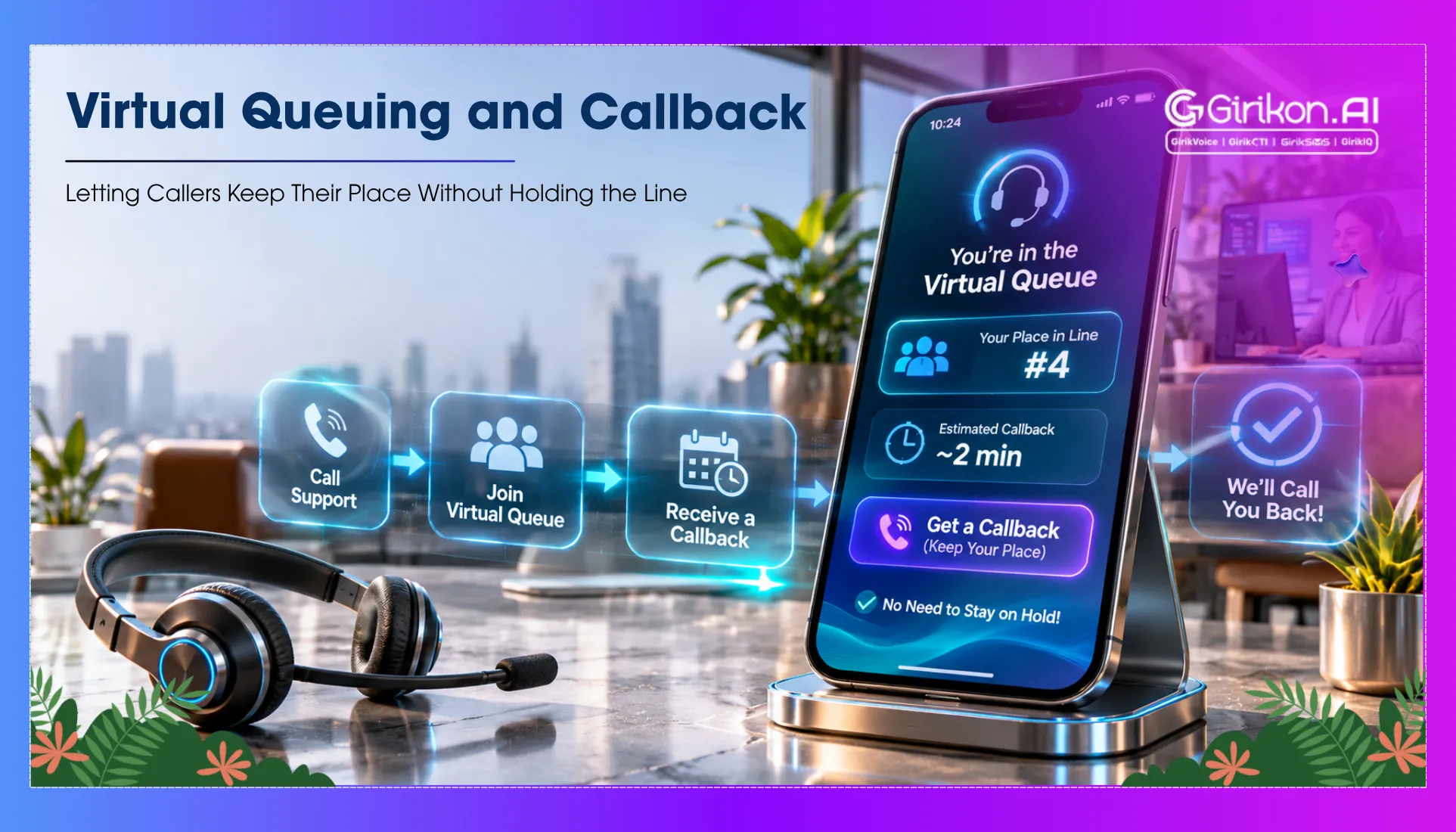
Traditional call queues require clients to remain connected until an agent is available to answer their query. This model is disrupted by Virtual Queuing, a key feature of Salesforce call queue management that enables callers to retain their position in the queue while having the option to leave the phone line and receive a callback when an agent becomes available.
Rather than being kept on hold, clients have the option to leave the call physically and receive a callback when their turn approaches. The system logs their request, handles their queue position, and begins an outbound call according to set up routing rules.
The four-step process includes:
- 1. The Client Enters the Queue: A projected wait time is offered by the contact center.
- 2. An Option for Callback is Offered: The caller can either continue waiting or request a callback.
- 3. The system Maintains the Request: The phone number of customer and queue information are logged so the request can be directed properly.
- 4. The callback is Initiated: When the request reaches the appropriate point in the queue, the system automatically calls the customer and connects them with an available agent based on agent availability.
Often called virtual hold, this approach separates the waiting time of customers from the time they had to spend physically connected to the contact center. Virtual queuing doesn't essentially make an agent available sooner. In fact, it offers clients better control over how they spend the time before support arrives.
Understanding the Technology Behind Callback Software
A satisfying callback experience requires more than an automated outbound call. It depends on an effective contact center automation system that can manage queue positions, check agent availability, record client preferences, and handle exemptions efficiently.
Modern callback software integrates these capabilities into contact center workflows. Such software can support automated number collection, queue ordering, retry rules, client notifications, and reporting.
For example, consider a client in the banking and finance sector calling a bank's customer service regarding a transaction failure. The estimated waiting time is 15 minutes. Rather than staying on hold, the customer opts for the callback option, approves their number, and disconnects.
The callback request remains in the system until the right agent becomes available. With Salesforce inbound calling, the platform automatically initiates the call and connects the customer to the available support executive.
Customers can spend that time on tasks that could add value. For the contact center, the interaction continues to be a part of a managed service process instead of becoming an abandoned call.
Besides sending SMS notifications, some platforms update callback records or adjust routing depending on the queue conditions. These capabilities make callback software useful in environments where manual follow-up wouldn't be easy to manage consistently.
The Call Back Queue: Preserving Customer Trust
Offering a callback is just the first step; The real challenge lies in building customer confidence through effective Salesforce call flow management, ensuring they can trust the system to reserve and maintain their place in the queue
A callback queue that isn't managed properly can hamper the client experience. If callback requests are positioned behind newer callers, customers may have to wait longer than expected. Also, calls made too early may leave customers baffled, while frequent attempts without setting clear limits can leave customers, as well as agents frustrated.
A well-structured queue should set clear rules for:
- Queue position: Maintain the initial waiting priority where the platform supports it.
- Callback timing: Start calls as per queue conditions and the aligned service policy.
- Retry management: State the number of attempts permitted and how much time should pass between them.
- Customer availability: Provide alternatives to confirm a number, choose a suitable time where supported, or manage a request for callback.
- Exception handling: Decide what happens if a client fails to answer, requests cancellation, or call again.
Queue design should account for service priorities and the skills of agents. A customer looking for technical support may require a specialist rather than the first available agent. The objective isn't just to give a call back to the customers. Rather, The goal of an AI contact center is to reconnect customers with the right agent while maintaining a dependable service experience.
How Does 'Virtual Hold' Help Contact Centers Improve Service Quality?
Listed below are advantages beyond customer convenience.
- 1. Less Abandoned Calls: Virtual hold allows customers to leave the call waiting queue while retaining their place. This reduces potential abandonment through AI call center automation, helping companies recover lost opportunities and improve customer engagement.
- 2. Better Client Experience: Rather than waiting on phone, customers can continue handling other tasks. This makes customer support less disruptive.
- 3. Optimal Agent Utilization: Automated callbacks streamline inbound, as well as outbound interactions - freeing agents while the system connects with customers.
- 4. Greater Operational Visibility: Callback data, combined with Salesforce call monitoring, helps supervisors track queue demand, client preferences, and completion rates to optimize staffing and improve service policies.
- 5. Potential Telephony Savings: Reducing connected waiting times can help lower telephony expenses and support overall call center cost reduction. This might vary based on carrier pricing and system configuration.
Final Words:
Virtual Queuing, smart callback software, and AI voice agents allow clients to escape long waits without dropping their place in line. Besides reducing abandoned calls, these solutions help contact centers augment agent capacity, value customer time, and manage high demand.