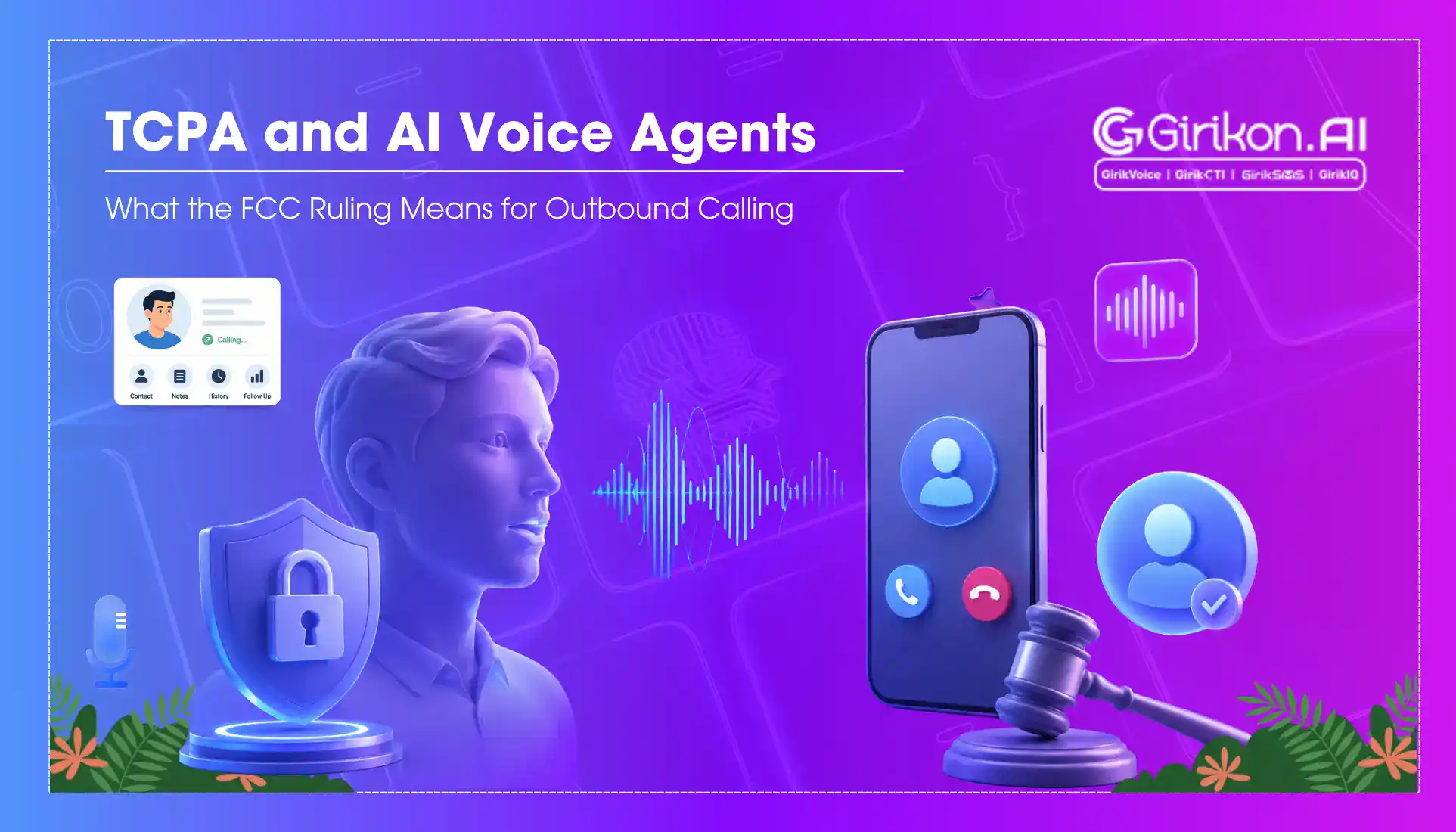
Are your TCPA AI voice calls legal? Explore the FCC declaratory ruling, essential outbound compliance steps, and best practices for AI voice agents.
- 1Treat AI-generated voices that sound human as "artificial" under the TCPA, extending existing consent and disclosure rules to these calls.
- 2Recognize that the FCC ruling applies existing TCPA provisions to AI voice agents, rather than creating a new AI-specific law or banning their use.
- 3Implement robust consent mechanisms, clear call-purpose distinctions, proper disclosures, and effective opt-out processes for all outbound AI voice calls.
- 4Differentiate compliance requirements based on the call's purpose (e.g., telemarketing vs. informational) and the type of number being called (mobile vs. residential).
- 5Establish clear governance for AI voice platforms, including consent architecture, caller identification, suppression logic, audit trails, and vendor accountability.
Navigating TCPA AI Voice Calls: A Compliance Playbook for Outbound AI Voice Agents
Customer privacy and consent are core aspects of outbound communication. Yet many organizations still continue to question if they can run outbound calls through an AI voice agent without risking TCPA exposure? Part of the answer arrived in 2024. AI-generated speech that sounds like human falls under the TCPA’s rules for synthetic and recorded communication. Nothing more, nothing less. The ruling didn't invent a new AI calling statute. It didn't ban voice agents either. What it did was extend existing provisions to technology lawmakers did not account for at the time.
The real work now sits downstream of that ruling in consent records; call-purpose distinctions, disclosures, opt-out mechanics, and documentation solid enough to survive a challenge. And since 2024, courts have added their own layers to this picture, which means treating the FCC's ruling as the complete legal answer would be a misstep. So, what do businesses do? How do they move from the legal framework into the operational side? This blog will explore how those requirements translate into deployment logic, suppression triggers, and audit trails that can be defended under scrutiny.
Are AI voice calls covered by the TCPA?
Generally, yes. Once an AI agent produces a humanlike voice to open or carry a call, the FCC classifies that voice as artificial under the statute. Swapping the underlying technology doesn't erase the obligation attached to it; consent and disclosure requirements travel with the call regardless of what generated the voice on the other end.
What the FCC AI Declaratory Ruling Changed
FCC 24-17 tackled one specific question: does an AI-generated voice qualify as “artificial” under the TCPA as written? The answer was yes, and the logic behind it was fairly simple. A statute meant to cover any voice other than a live person speaking in real time cannot exclude convincing synthetic speech. That's the whole ruling, essentially, no rewrite of the TCPA, just an application of existing rules to a technology that didn't exist when the law was written. So, it means:
- Cloned or AI-generated voices count as artificial voices under the statute because the rule tracks the voice itself, not where it came from.
- There's a real distinction between the technology placing a call and the legal duties that govern it; one has no bearing on the other.
- An AI agent capable of holding a dynamic conversation isn't removed from the obligation just because it’s not reading from a fixed script.
- The ruling folds AI voice calls into existing TCPA obligations. It doesn't stand up a separate compliance track for AI specifically.
How TCPA AI Voice Calls Affect Outbound Calling in 2026
Where this land operationally depends heavily on who's being called, and for what reason. It covers these points:
- Calls to Mobile Numbers: Wireless numbers typically need to express consent before an artificial voice can reach the line. Telemarketing calls get scrutinized far more heavily than purely informational ones, a distinction worth building into workflows early, not discovering later.
- Telemarketing and Advertising Calls: Marketing-driven calls usually require prior to express written consent, not an implied version. Identification and opt-out requirements come attached. Not every artificial voice interaction falls under the same compliance category. A scheduling reminder and sales solicitation must be treated differently, even when delivered through the same platform.
- Residential Calls: Residential lines bring their own set of considerations, separate from mobile. Put exemptions based less on the number and more on why the call was placed in the first place.
Do AI voice agents need consent to make outbound calls?
Usually, yes, though which type of consent applies to these calls' changes based on the call's purpose and the number being dialed.
What Controls Define TCPA-Ready AI Voice Platforms?
Ensuring prerecorded voice TCPA compliance requires clear governance. The framework should answer core questions about consent, identification, suppression, and accountability. These will help you ensure voice automation systems comply with AI calling laws and can pass regulatory review.
- Consent architecture and scope: Document when, where, and how consent was obtained. Also, link it to the correct customer, purpose, and channel.
- Caller identification: Every outbound call must display accurate caller ID information.
- Suppression logic: Automate opt-outs and Do Not Call requests across all channels.
- Audit trail: Keep records of consent, call outcomes, and suppression events for compliance investigations.
- Vendor accountability: Set up clear responsibility across carriers, platforms, and internal teams.
5 Steps to Operationalize FCC AI Robocall Rules in Deployment
Step 1: Gate call eligibility with consent data
Build the consent dataset before automation. Only numbers with prior express consent should enter the dialing workflow, ensuring compliance with FCC AI voice ruling requirements.
Step 2: Embed suppression triggers into call logic
Design workflows so opt-outs and Do Not Call requests immediately block outreach. Suppression must run automatically, without human intervention, to meet AI robocall rules.
Step 3: Apply escalation rules for revoked consent
Configure escalation logic to halt outreach when consent changes. This prevents unauthorized telemarketing calls and aligns with FCC AI declaratory ruling obligations.
Step 4: Preserve evidence for every calling decision
Maintain detailed audit trails for consent source, campaign, call purpose, and suppression events. Records must explain how each outbound calling decision was made under AI calling compliance.
Step 5: Integrate compliance checks into monitoring workflows
Embed ongoing compliance checks into system monitoring. It ensures FCC AI robocalls remain controlled, and voice automation continues to meet evolving TCPA compliance standards.
Conclusion
The compliance obligations around TCPA AI voice calls are now a permanent part of outbound communication with FCC AI voice ruling asserting that artificial voices fall under existing law. Businesses can no longer treat compliance just as a checklist to tick off; it must be engineered as part of system design and revisited regularly. Hopefully, this blog has given you an understanding of what AI robocall rules, how FCC regulations reshape your existing infrastructure. In addition, the prerecorded voice TCPA compliance guide will streamline consent management and suppression workflows, allowing your teams to focus on customer engagement while maintaining regulatory confidence.