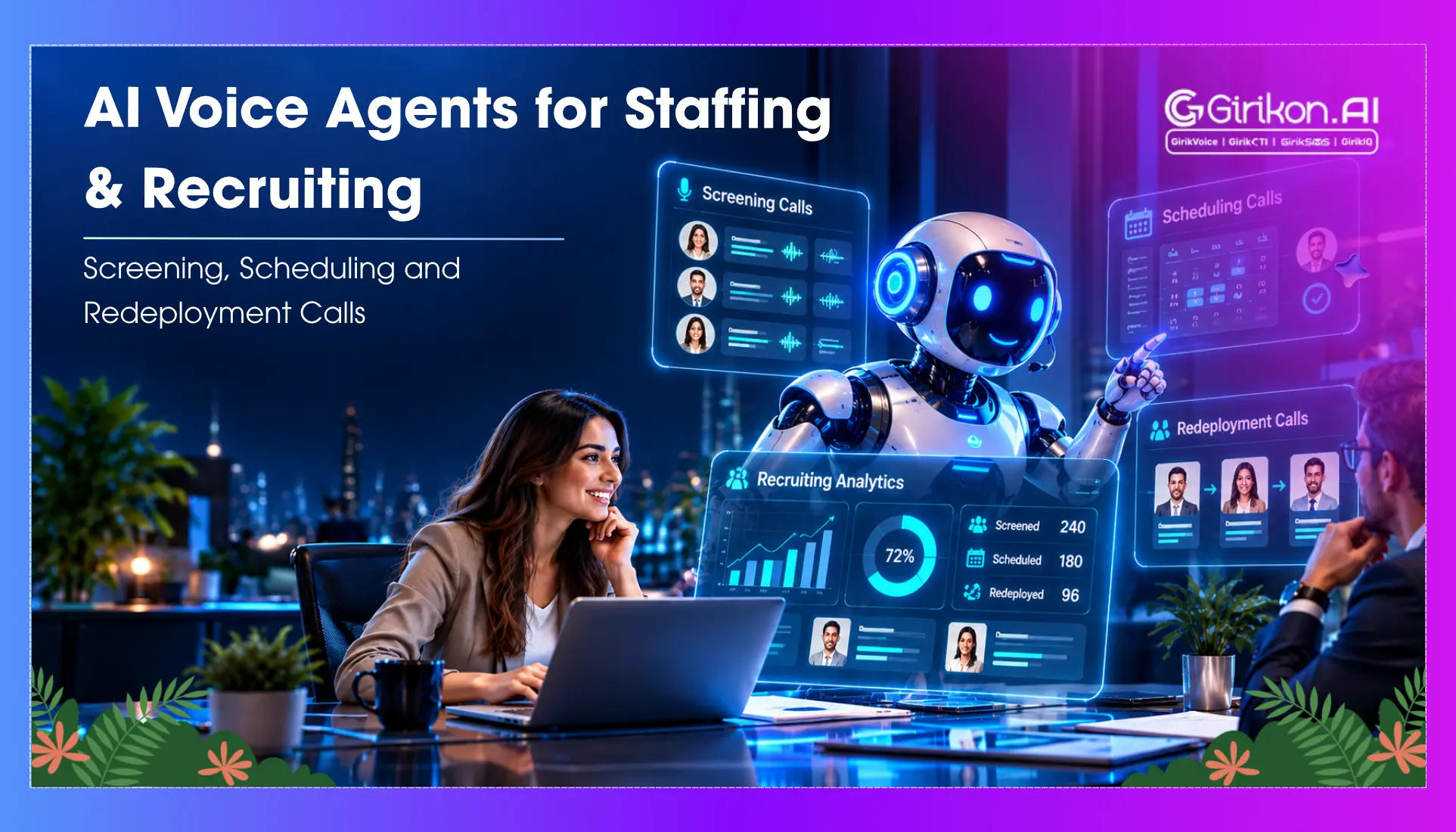
This blog gives details about how AI voice agents help make the recruitment process easier and faster. It explains how AI can manage candidate screening, interview scheduling, and follow-up calls.
Recruiting involves plenty of calls that keeps a candidate moving forward. But what happens when those calls start taking up more of a recruiter’s day than expected?
Screening candidates, confirming interviews with applicants, and following up on candidates for a new task may seem like a small task on its own. Across a busy recruiting funnel, these simple tasks can quickly multiply. It's not a matter of how long it takes to complete one conversation; rather, the problem is that recruiters need to constantly repeat the same conversations while dealing with candidates and open positions.
Recruiting calls do not have to be attended to in the same manner. Some recruiting calls will go through a process where recruiters ask questions or make confirmations. These are the conversations where AI voice agents for recruiting can help keep the hiring process moving without making routine call a recruiter’s responsibility.
Where AI Can Be the First Step in the Recruitment Process
Not every call for recruitment has to start off with the recruiter.
There may be some calls in which the purpose of the call is clear, and there is a certain procedure followed during the call. In such cases, the AI could make the first move while keeping the recruiter at hand for those instances when some discretion is required.
This creates a practical boundary for recruiting voice automation:
- Screening: AI can take care of structured initial questions and find suitable candidates for the job before involving recruiters.
- Scheduling: The job of scheduling the interview can be done through AI by saving time during communication.
- Redeployment: The available candidates can be contacted by AI to check whether they are interested or not.
The value is not simply making more calls. It is keeping routine conversations moving without asking recruiters to spend their time on every interaction.
From First Call to Recruiter Handoff: How the Workflow Works
The process here does not involve outsourcing the entire recruitment discussion to an AI. Instead, it involves advancing the structured portion of the discussion and then engaging the recruiter where they add value.
AI Contacts the Candidate
AI voice agent communicates with the candidate about the purpose of the call, whether it is for confirmation, collecting initial information, or offering a job opportunity.
Call Follows a Predefined Path
The voice agent asks necessary questions related to the workflow and provides answers based on the answers of the candidate, thus keeping the call within the required scope.
Responses and Outcomes Are Captured
Important information, such as the candidate's answers, availability, interest, and result of the call, is logged by the recruiting team in order to have all the relevant data for further actions.
Candidate Proceeds to the Next Stage
Based on the call outcome, the workflow can automatically perform the required steps — such as scheduling an interview, performing a follow-up call, or flagging the candidate for recruiter review.
Recruiter Takes the Call if It Needs Expert Judgment
If the call requires an unexpected response, negotiation, or persuasion skills, the call will be handed over to the recruiter with all the information gathered beforehand.
Candidate Screening Calls: Where AI Can Take the First Pass
The initial process of screening might consume a lot of time for the recruiter, particularly when there are numerous applicants for the job. Normally, the first process would involve questions from the recruiter to determine whether the candidate will move to the next stage or not.
In this situation, the AI could make it easier by talking to the candidates to get information in order to see if they qualify. Depending on the job position—some of the issues that the recruiter would seek to know from the candidates include:
- Availability of the candidate for the specific shift.
- Experience possessed by the candidate in the required role.
- The location from where the candidate can work.
- Whether they are still interested in the role and willing to continue.
These responses will provide a basis for the following conversation. Instead of using time to reach out to all applicants and gather the same preliminary information — they can now focus their attention on those applicants who are prepared to have a more in-depth conversation.
The recruiter still makes decisions that require context. AI simply handles the structured first conversation and keeps the screening process moving.
When Screening Volume Becomes the Bottleneck
Staffing agencies find it hard to screen applicants if their number increases faster than the capacity of recruiters to reach out to them. The questions might be simple — but reaching out to all applicants, waiting for answers, and following up could hold back the whole process.
This is where AI for candidate screening calls can help. A voice-based AI agent can contact candidates fast and carry out the conversation to determine their availability and interest in proceeding further.
In this way, recruiters will have extra time to evaluate the candidates who are ready for a conversation, rather than going through all the candidates manually.
Concluding Words
AI voice agents can handle calls that make the staffing workflow go smoothly from initial screening interviews through rescheduling workers and opportunities that match their availability.
The goal is not to take recruiters out of the interactions here. It is about reducing this repetitive process as much as possible, leaving the recruiters to handle those tasks where judgment is needed.