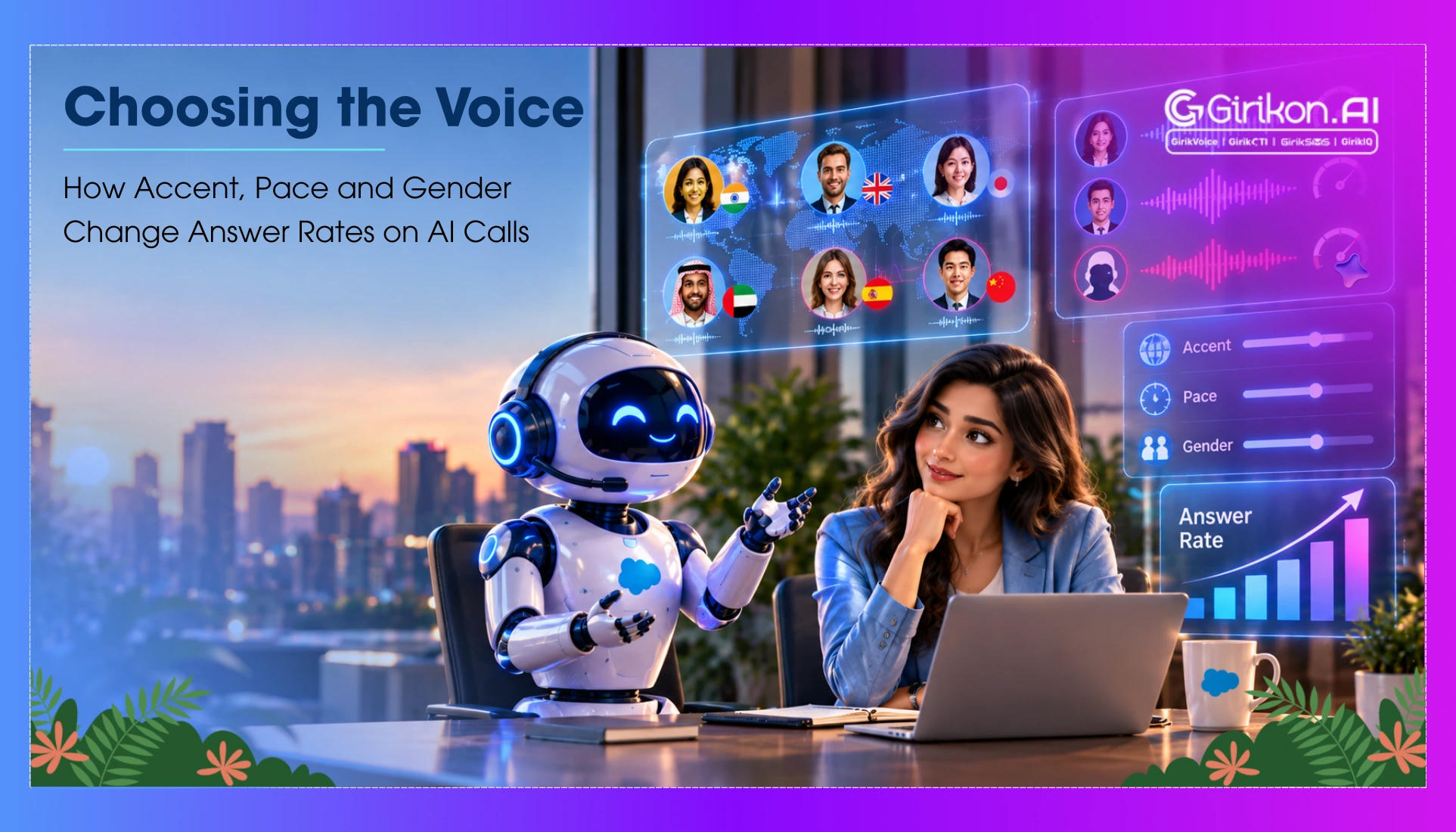
The text to speech voices powering AI phone systems have gotten sophisticated enough that the old "obviously a robot" tells are fading, but that just means the subtler signals now do the sorting work instead. Accent, speaking rate, pitch, cadence - these cues trigger snap judgments that most callers couldn't consciously articulate but act on immediately.
Most people decide whether to stay on the line within the first two or three seconds. Not the first sentence - the first syllable or two, honestly. The text to speech voices powering AI phone systems have gotten sophisticated enough that the old "obviously a robot" tells are fading, but that just means the subtler signals now do the sorting work instead. Accent, speaking rate, pitch, cadence - these cues trigger snap judgments that most callers couldn't consciously articulate but act on immediately.
Why the Default Voice Is Usually the Wrong Choice
The failure mode here is pretty consistent across organizations. A team deploys an AI phone agent, picks whichever voice sounds cleanest in a demo recording, and ships it. Six weeks later they're looking at drop-off rates without any idea that the voice itself might be a variable worth testing. The recording that sounded polished in a quiet office can read as cold, clipped, or generically "corporate" to someone who just answered a call from an unfamiliar number while making lunch.
Worth noting - this isn't purely a perception problem. Answer rates, time-to-hang-up, and transfer-acceptance rates are all affected by vocal presentation in ways that show up in real call data. Teams that have run A/B tests on voice selection have reported meaningful variation in engagement just from swapping voice profiles, sometimes without changing a single word of the script.
The Accent Variable Is Messier Than It Looks
Anyway, the accent question is where things get genuinely complicated. The instinct a lot of organizations have is to default to a "neutral" accent - which in practice usually means a generically American or generically British mid-Atlantic pronunciation pattern. The assumption is that neutral equals acceptable across geographies. That assumption does not hold up evenly.
Regional accent matching - using a voice that sounds like it comes from the same area as the caller - tends to improve early engagement, particularly in markets with strong regional identity. A Southern US accent calling into a regional healthcare network in Tennessee performs differently than a coastal broadcast-neutral voice making the same call. Not universally better, not by a large margin in every case, but the difference is directionally consistent enough that it's worth testing rather than dismissing.
The complication is that accent perception is layered over trust association, layered over familiarity bias, layered over cultural expectations about what an "official" or "professional" voice sounds like - and those layers don't resolve cleanly into a single recommendation. An accent that builds rapport in one segment can erode credibility in another. That's not a paradox so much as a reminder that voice selection is a segmentation decision, not a brand-wide one.
Pace and the Silence Problem Nobody Talks About
Speaking rate is probably the most underrated lever in this entire conversation. Most AI phone agents default to a pace that sounds fine - neither frantically fast nor weirdly slow - but fine is doing a lot of heavy lifting there. The failure condition is usually at the edges. An agent delivering a ninety-second disclosure at a pace calibrated for someone with a law degree, while calling a general consumer audience, is an engagement problem masquerading as a compliance one.
Slower pace builds comprehension and (this is the part that gets overlooked) signals patience. Callers who feel like the voice is patient tend to stay engaged longer. The problem is that slowing pace too far, particularly on an outbound call where the caller is already slightly defensive, can read as condescending. So the actual variable teams should be testing is not "slow versus fast" but rather where in the call the pacing shifts - a slightly faster acknowledgment at the open, a slower pace in the information-delivery portion, with pause length calibrated to feel like thinking rather than lag.
What Gender Actually Does to Call Behavior
The honest answer here is that gender effects on answer rates are real but context-dependent in ways that don't support a blanket rule. Some research in call center contexts suggests female voices tend to receive slightly longer average call durations on certain inbound service calls, while male voices sometimes see marginally higher compliance rates on specific types of outbound requests - but those findings come with a lot of contextual caveats and the research base is not enormous. It should not be treated as settled doctrine.
What is more consistently observed is that voice-to-purpose misalignment creates friction regardless of gender. A voice profile that sounds authoritative and direct works well for appointment confirmations and collections-adjacent contexts. That same profile applied to a wellness check or patient recall call can generate hang-ups that a warmer, more conversational voice profile would have avoided. The gender question and the tone question are entangled, and separating them in testing is harder than most teams expect.
| Voice Attribute | Observed Effect on Engagement | Highest-Risk Mismatch |
|---|---|---|
| Neutral accent | Broad acceptability, low rapport ceiling | Regional identity-heavy markets |
| Regional accent | Higher rapport in matched segments | Cross-regional or national campaigns |
| Fast pace | Efficient, but callers feel pressured | Elderly callers, complex disclosures |
| Slow pace | Signals patience, aids comprehension | High-volume outbound, short-window calls |
| Warmer voice tone | Better on emotional or health contexts | Authoritative requests needing compliance |
| Authoritative tone | Higher compliance on directive tasks | Wellness, empathy-dependent contexts |
The "warm tone" row in that table is worth expanding on in the surrounding strategy conversation, because warmth is layered over pace, layered over pitch, and treating it as a single dial is how teams end up with a voice that tests well in isolation but feels off in live call conditions.
Building a Voice Persona That Actually Fits the Use Case
Getting the best voice for AI phone agent deployment right starts with working backward from the caller's likely emotional state at the moment of answer - not from what sounds good in a product demo. A patient who just received a concerning lab result and gets a follow-up call needs something different from a loyal customer getting a routine account update, and designing both calls around the same voice profile is a design failure waiting to generate churn.
The concept of voice persona design is useful here, though it's often treated as a brand exercise rather than a functional one. Voice persona is not just about what sounds "on brand" - it's about what keeps someone on the line long enough to hear the purpose of the call, which is a different design brief entirely.
A practical framework for voice persona decisions worth considering:
- Define the emotional context of the call first - is the caller likely to be defensive, neutral, or expectant when they answer? The answer shapes everything else, because a defensive caller needs pace and warmth signals fast, while a neutral caller can tolerate a slightly more formal open.
- Map the voice attributes that address that emotional state before locking in accent or gender. Pace and warmth often matter more than either of those more visible variables.
- Test at least two meaningfully different voice profiles in live conditions before treating any result as conclusive, and look at hang-up timing - not just overall answer rate - because early hang-ups versus mid-call drops tell you different things about what the voice is or isn't doing.
- Revisit voice selection when the audience segment changes, even if the call type stays the same. The voice that works for your 35-to-55 primary segment may not carry over to an adjacent demographic without retesting.
AI Voice Agent Voice Selection: The Harder Question Behind All of This
The choices above exist inside a larger question that AI voice strategy is still working out in real time. When the brand voice AI agent becomes the primary human-sounding interaction most customers have with an organization - not an assistant to a human agent, but the interaction itself - the voice selection decision stops being a configuration choice and starts being a brand identity decision of real consequence. That shift is already happening for a meaningful number of organizations.
The discipline that brings these threads together - accent research, pace calibration, persona design, demographic testing - is not yet treated with the same strategic weight as visual brand identity or copy tone of voice at most organizations. The teams doing it well tend to have someone who owns it, not just someone who approved a vendor demo.
Whether the field develops enough shared benchmarking data to make these decisions less iterative and more evidence-led is genuinely unclear right now. The signals are getting better. The testing tools are getting better. But the call, in the end, is still answered by a person who decides in the first two seconds whether to stay or hang up - and that part has not changed, and probably won't.