Discover how Salesforce CTI helps real estate brokerages streamline listing inquiries, capture every lead, and route prospects to the right agents. Learn how integrated calling, automated lead capture, intelligent agent routing, and centralized customer data can improve response times, agent productivity, and conversion rates.
- 1Integrate Salesforce CTI to connect telephony with CRM, unifying lead records, call data, and property information for real estate brokerages.
- 2Leverage CTI features like automatic caller identification, click-to-dial, and call logging to enhance agent efficiency and customer service.
- 3Implement intelligent call routing based on factors like property type, location, and agent specialization to ensure prospects reach the most relevant agent quickly.
- 4Utilize call tracking in Salesforce to associate phone calls with specific prospects and understand conversation context, improving lead management.
- 5Streamline the lead management process by capturing all interactions, scheduling follow-ups, and updating records directly within Salesforce after each call.
The real estate sector is extremely competitive and when it comes to real estate brokerage speed, approachability and personalized communication can turn out to be a gamechanger especially w.r.t scheduling property visit by prospect. While websites, portals, and other digital channels generate a steady flow of leads, the phone continues to be one of the most effective channels for getting access to high-intent prospects.
Now, if a prospective buyer who is all set to make a purchase makes a call with the intent of discussing financing, pricing, or even making an offer only to be left unanswered or routed to a wrong agent then the probability of brokerage losing such a valuable opportunity is
This is where Salesforce CTI for real estate can turn the tables. By integrating telephony with Salesforce, brokerages can bring together lead records, calls property information, agent activity, and follow-up processes into a connected environment.
Salesforce CTI for Real Estate – All You Need to Know
Salesforce CTI connects the phone system of a broker with Salesforce. Rather than managing separately handling calls from customer and property records, agents can manage interactions directly within the CRM environment.
Depending on the CTI solution and brokerage needs, capabilities can include:
-
Automatic caller identification
-
Call logging and disposal
-
Call recording
-
Call routing and transfers
-
Salesforce IVR based inquiry handling
-
Salesforce agent availability management
-
Missed-call tracking
-
Call notes and follow-up tasks
-
Call analytics and performance reporting
Why Do Phone Calls Truly Matter in Real Estate Lead Management?
Real estate leads are usually time sensitive. A prospect looking for a specific apartment, villa, or investment opportunity may connect with several brokers within a short period.
The brokerage firm that responds first—and provides necessary details runs a better chance of pushing the prospect further down the sales funnel. Yet, traditional phones fail to match up to the evolving needs of clients as agents might not know which property a caller is interested in when the same phone number is used by everyone. Additionally, missed calls might not be followed up instantly and managers may find it difficult to track the leads that were contacted and identify what was considered during each call.
A Salesforce telephony integration can address these gaps by associating phone activity with CRM records.
What is Real Estate Call Tracking Salesforce?
Real estate call tracking Salesforce help brokerage firms connect phone calls with the right prospects and understand the underlying context in every conversation. When a prospect places a call, the CTI system can easily detect the caller and connect it with the right Salesforce contact or lead. This allows the agent to evaluate details such as the interest of prospect, prior interactions, agent allocated, viewing history, lead status, and follow-up actions. After the call, the discussion can be logged, property viewings scheduled and more. This minimizes manual data entry and keeps lead and call data managed in Salesforce.
How to Get Calls to the Right Agent?
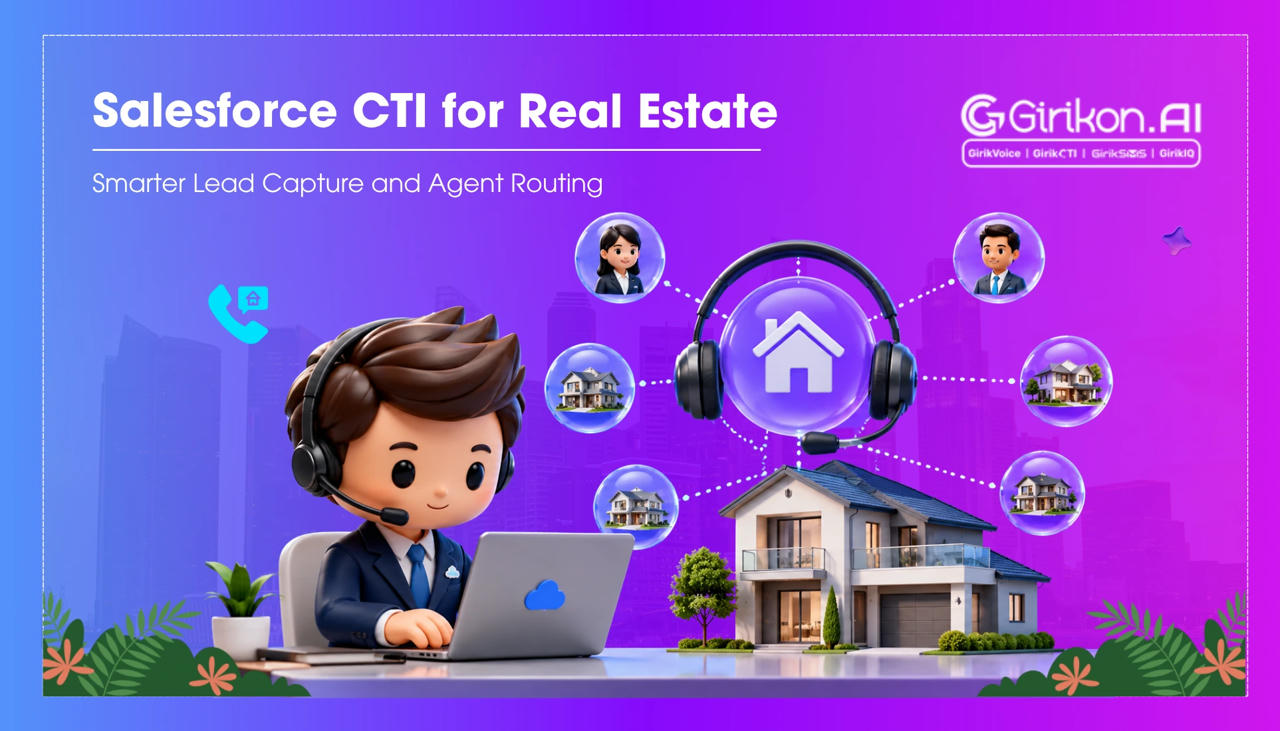
One of the most useful use cases of CTI in real estate is property inquiry routing. Since brokerages must manage a huge number of listings across various locations, price ranges, property types, and client segments, they can leverage CTI and Salesforce call queue management to route calls based on multiple factors such as location, language, lead owner, customer type, and more, rather than sending every caller to a general queue. For instance, a query regarding a commercial property can be routed to an agent focusing on that market, while calls w.r.t residential property can be directly handled by the team specializing in that market. This reduces transfers, improves response times, and provides customers with relevant experience.
Brokerage Phone System CRM Integration
A robust brokerage phone system CRM shouldn’t just connect calls to Salesforce. It must create a seamless workflow from the first query to the closed deal. So, if a prospect calls to ask about an online listing, CTI can pair the caller to the right Salesforce record and display key details to the agent. After the call, the agent can inform the lead, add suggestions, schedule a watching, or start a follow-up task. This keeps every interaction unified and provides stability when multiple teams are engaged.
Click-to-Call for Immediate Outbound Follow-Ups
outbound calls made to website leads, previous buyers, sellers, investors, seeing attendees, referrals and more are made simple by CTI. With click-to-call, agents can call straight away from Salesforce without searching for phone numbers manually. This minimizes redundant tasks, hastens follow-ups, and ensures calls are linked to the right records. This information can be used by managers to monitor agent activity and comprehend follow-up patterns.
Missed Calls Must Become Follow-Up Opportunities
A missed call from a potential buyer translates to a missed sales opportunity. CTI can help brokerage firms track unreciprocated calls while creating follow-up tasks or notifications by default for the right agent. A typical workflow appears to be: Incoming call → No answer → Follow-up task created → Agent calls back → Interaction logged. This optimizes accountability, hastens callbacks, and minimizes the probability of high-intent prospects exiting the sales pipeline.
Call Recording and Quality Monitoring
From agent training and quality monitoring to compliance with applicable laws, consent requirements, and internal policies, Salesforce call recording provides the necessary support. Managers can review interactions to understand how agents handle pricing queries, objections, property information, and viewing requests. Call analytics can also reveal common customer concerns, such as parking, preservation fees, financing, or amenities, helping firms improve listing data and sales resources.
Salesforce CTI Analytics for Brokerage Performance
Connected CTI analytics provides brokerage managers visibility into inbound, outbound and missed calls. Apart from this, they also get visibility into agent activity, call duration, follow-ups, lead conversions, lead sources and more. These insights determine performance gaps, fortify follow-up strategies, and figure out whether challenges are related to lead pricing, quality, agent awareness, or other factors.
Final Words:
Every call can translate to a property inquiry, opportunity for viewing, seller interaction, or prospective transaction. Salesforce CTI for real estate connects these calls with CRM processes helping brokerages figure out callers, route queries, capture lead details, automate follow-ups, and monitor performance. CTI turns normal phone interactions into structured and measurable sales activities when combined with real estate call tracking Salesforce, phone system CRM for brokerage firms, and property query routing.
Real Estate Lead Routing Salesforce
Read the full guide on real estate lead routing salesforce.