Discover how AI voice agents are transforming logistics operations through automated shipment tracking, proactive delivery notifications and efficient exception handling. Learn how voice AI helps reduce call volumes and streamline freight communication.
- 1Automate routine shipment updates and inquiries using AI voice agents to free up human agents for complex issues.
- 2Leverage AI voice agents to handle a significant portion of inbound voice calls, improving efficiency and reducing wait times.
- 3Implement AI voice agents that can understand natural language and access real-time logistics data to provide accurate information.
- 4Utilize AI voice agents for proactive customer communication, such as delivery confirmations, delay notifications, and pickup reminders.
- 5Deploy AI voice agents to triage freight exceptions by identifying keywords, capturing data, and escalating with full context to human agents.
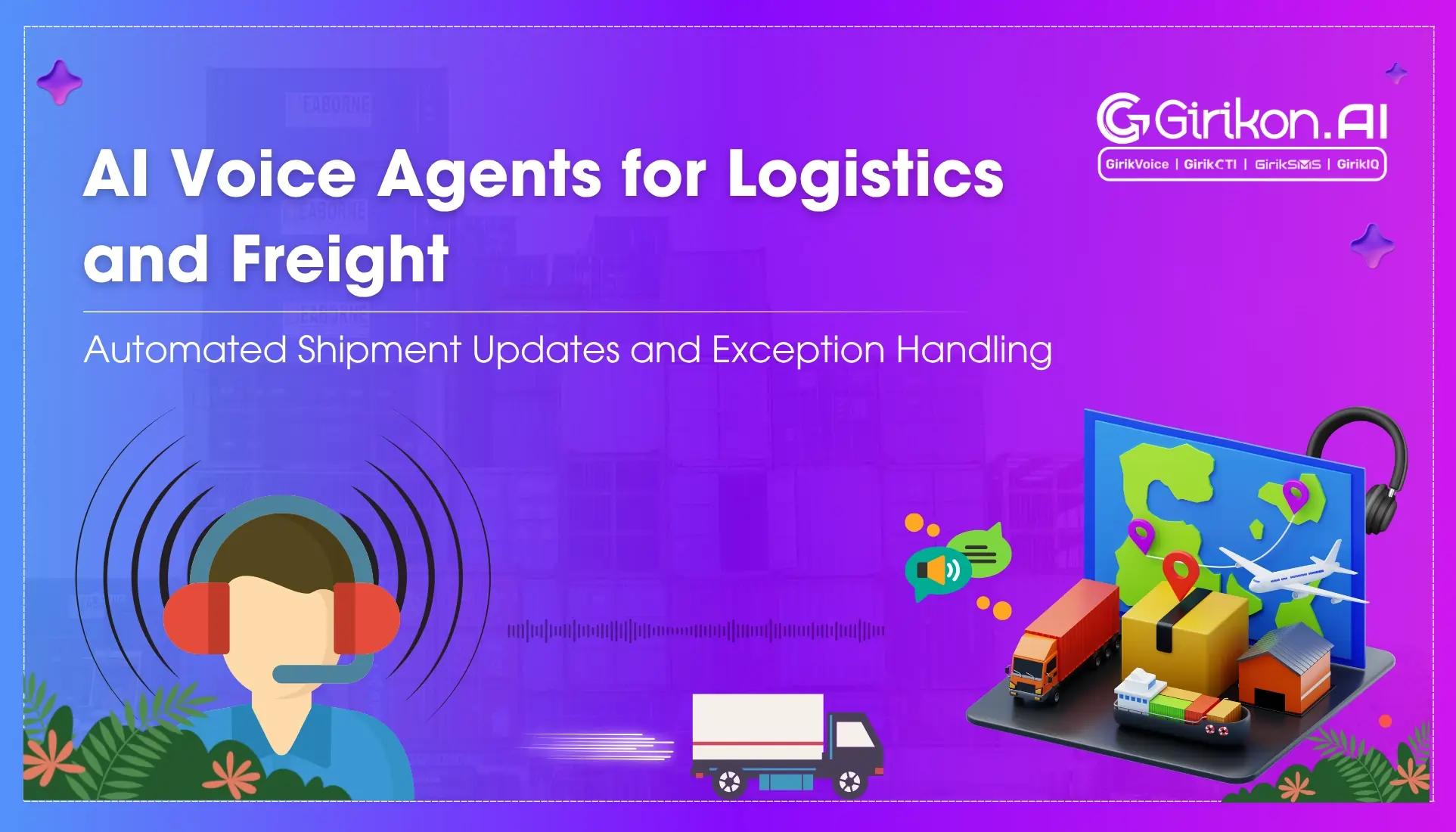
AI Voice Agents for Logistics and Freight: Automated Shipment Updates and Exception Handling
We all know the pressure in logistics. Customers want answers immediately. Operations teams are context-switching across a dozen tools. And a frustrating share of inbound volume is still going to humans for basic delivery updates. Shipment status automation through voice AI is where freight and logistics teams are starting to find some relief - and for good reason.
Logistics call automation is really about three things: cost, scale, and reliability. Anyway, let’s unpack how this actually works in the real world, why it’s not “just another chatbot,” and where voice agents really shine for exception handling and day-to-day operations.
AI Voice Agents for Logistics: What Are We Really Talking About?
When we say AI voice agents for logistics, we mean smart call-handling systems that answer inbound calls and engage in natural conversations with caller. They tap directly into enterprise data, and handle a major chunk of the call load autonomously.
These agents don’t just read static scripts. They can:
-
Understand natural language (“Where is my truck?”, “Can you reschedule delivery to tomorrow afternoon?”)
-
Access live shipment, route, and dispatch information from backend systems and carrier APIs
-
Trigger workflows like updating delivery windows, confirming loads, or raising a case for exceptions
Why Live Call Automation Deserves More Attention
We spend plenty of time optimizing chat, email, and portals, but the reality is that voice calls still sit at the heart of how freight teams communicate. Drivers call dispatch. Shippers call to check loading times. Customers call when something goes wrong.
According to recent logistics tech reports, a large percentage of inbound communication to carriers and 3PLs is still voice-based, especially for time-sensitive updates, delays, and accessorial charges. And yet, most teams handle these calls manually, with:
- Long hold times during peak hours
- Context switching between TMS, CRM, and spreadsheets
- Notes logged inconsistently - or skipped entirely after a long call
AI voice agents sit right in that gap. They handle the repetitive, straightforward call types so your team can focus their attention on the complex, messy situations that actually require human judgment.
How Automated Freight Updates Actually Work in Practice
Let’s get concrete, because “automation” can sound vague.
In most deployments, the AI agent hooks into your TMS, order management tools, or tracking systems through APIs, and as shipment milestones change-pickup, in transit, out for delivery, delayed, delivered - it automatically triggers automated shipment updates to customers and partners.
That might look like:
Delivery Window Confirmation
Outbound calls to consignees confirming expected delivery windows.
Delay Notifications
Proactive delay notifications when a truck is stuck or a port is congested.
Pickup Reminders
Pickup reminders to warehouses to prepare loads before a truck arrives.
Some providers already offer these capabilities as “AI calling for logistics,” automatically scheduling calls for delivery alerts and failed delivery recovery based on events in your logistics stack.
From Simple Status Calls to Freight Exception Handling
Here’s the thing: status calls are the easy win. The real value shows up when voice agents help with exception handling.
In freight, exceptions are everywhere:
- Missed pickups
- Damaged goods
- Address issues and access problems
- Customs or documentation delays
Modern voice AI can be configured to identify certain keywords or patterns in live conversations - things like “damaged,” “wrong address,” or “shipment missing.” When it detects these, it can:
-
Create or update an incident or ticket in your CRM or TMS
-
Capture structured details (photos requested via SMS link, correct address, preferred new delivery time)
-
Escalate to a human agent with full context, call transcript, and tags
So the voice AI doesn’t pretend to solve everything. It triages, gathers information, and routes exceptions to the right team with much richer context than a hurried manual note. Kind of makes you think why we ever relied on scribbled post-its.
Human Agents vs Voice AI
| Area | Best for Humans | Best for Voice AI |
|---|---|---|
| Routine status inquiries | Only when relationships or upsell are critical | High-volume status checks and simple FAQs at scale |
| Complex exceptions | Multi-party disputes, claims, negotiations, high-risk customers | First-line triage, data capture, routing and categorization |
| Sales and relationship calls | Strategic accounts, carrier negotiations, key shippers | Pre-qualification, scheduling follow-up calls or appointments |
| After-hours coverage | Escalations and critical incidents only | 24/7 response for standard questions and updates |
In many implementations, early adopters see a large share of standard inbound calls handled entirely by AI, while humans move into more specialized case handling and relationship roles. Not perfect, but a much better division of labor.
Mini Framework: Where Voice AI Helps the Most
If we had to create a quick mental model for where to deploy voice AI in logistics, it might look like this:
-
High-volume, repetitive calls
“Where is my shipment?”
“Can you confirm the delivery time?” -
Structured workflows
Appointment confirmations and rescheduling.
Load booking and simple dispatch coordination. -
Non-critical exceptions
Minor delays, address clarifications, access instructions. -
After-hours and weekend coverage
First-line response with escalation rules for urgent cases.
Customer Service Automation: Beyond Simple IVR
Traditional IVR (“Press 1 for tracking”) already tries to deflect calls. The problem is that it’s rigid and frustrating. Modern freight customer service automation via AI voice moves from menus to natural dialog.
“Hi, this is your logistics assistant. Tell me your tracking number or purchase order, and I’ll look it up.”
The system can handle:
- Multiple ways customers describe the same thing (“order number,” “consignment,” “BOL”)
- Free-form questions like “My shipment is delayed, what’s the status?”
- Follow-up questions without having to restart the call
Voice vs Chat for Shipment Updates: When Does Voice Win?
Let’s do a quick comparison, because teams often ask whether they should invest more in chat or voice.
| Aspect | Voice AI for Logistics Calls | Chatbots / Messaging |
|---|---|---|
| Urgency | Better when the matter feels urgent or time-sensitive | Works well for casual updates and self-serve |
| Complexity | Handles nuanced questions with back-and-forth clarifications | Great for structured, form-like flows |
| Adoption in freight | Strong fit for existing phone-heavy workflows | Growing fast, especially via web and messaging apps |
| Accessibility | Easy for drivers on the road and non-digital users | Best when users already live in digital channels |
To be fair, not every business needs both. But logistics teams that combine voice AI for inbound and proactive calls with messaging for low-urgency updates usually offer a smoother experience overall.
Where Supply Chain Leaders Are Heading with Voice AI
If we look at broader trends, supply chain and logistics leaders are investing heavily in AI to create “low-touch” operations - where planning, tracking, and exception management require far less manual intervention.
-
More organizations using AI to monitor disruptions and trigger automatic alerts and workflows.
-
Growing use of low-code platforms and APIs to plug AI agents into existing control towers and digital twins.
-
AI-enabled supply chains reducing logistics costs and improving service levels by automating decision-making and communication loops.
Getting Started with Voice AI in Logistics
Here’s a recommendation of a short checklist to a logistics or freight operations leader exploring voice AI:
-
Start with one or two high-volume call types
Status requests, delivery confirmations, missed delivery follow-up. -
Connect to the right systems first
Ensure your TMS, CRM, and tracking sources are integrated so answers are accurate and real time. -
Design clear escalation flows
Define when calls should move from AI to human, and what context gets passed. -
Monitor, then iterate
Track operational KPIs, then use those insights to tune conversation designs and flows. -
Communicate with customers
Be upfront that they’re interacting with an automated assistant provide a convenient way to talk to a human agent.
The Bigger Picture: AI as a Strategic Lever
Over the next few years, as more supply chain organizations adopt AI and advanced analytics, voice agents will simply become part of how freight businesses communicate. They’ll be one more channel - alongside portals, messaging, and email - but with a uniquely human feel.
We will see voice agents that:
- Understand industry terminology
- Handle multi-language conversations for cross-border logistics
- Tie into broader freight customer service automation programs that coordinate voice, chat, and self-service touchpoints across the full shipment lifecycle
Bringing It All Together
To close the loop, without making it sound too polished: voice AI is no longer a speculative “someday” technology for logistics. It’s already handling real calls for shipment tracking, load booking, dispatch, and customer updates in the wild. Companies using it are cutting manual workloads, improving responsiveness, and giving teams more time to solve problems that actually need human judgment.
For logistics and freight operations that live and breathe time, reliability, and communication, supply chain voice AI and logistics call automation aren’t just buzzwords - they’re levers to run tighter operations and keep customers in the loop without burning out your teams.