A practical guide to the 11 security questions enterprise procurement teams ask before deploying voice AI, covering data handling, access, compliance, integrations, and incident response.
- 1Prioritize thorough data handling and storage investigations, asking specific questions about data types, retention, deletion processes, and opt-out options for model training.
- 2Scrutinize access and authentication controls, demanding clear identification of personnel with access, robust logging, and secure authentication mechanisms for the AI agent.
- 3Verify compliance certifications like SOC 2 Type II and understand the vendor's concrete measures for adhering to industry regulations such as GDPR and HIPAA.
- 4Define and confirm the voice AI agent's access scope to connected systems, ensuring it operates on least-privilege principles and data is secured in transit with TLS encryption.
- 5Establish the vendor's comprehensive incident response plan, including clear procedures and communication protocols for security incidents affecting buyer data.
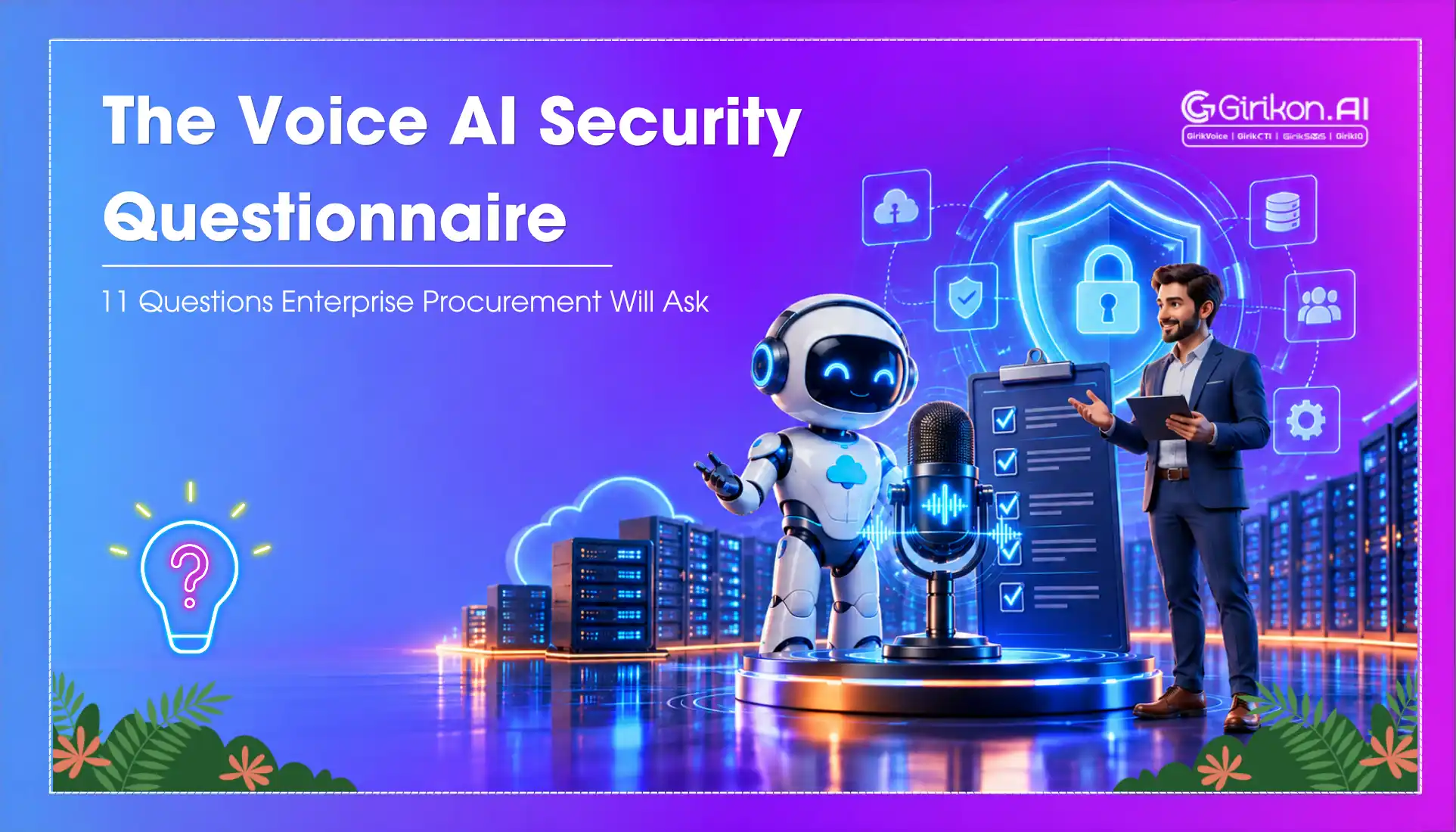
The Voice AI Security Questionnaire: 11 Questions Enterprise Procurement Will Ask
Security is one of the first things an enterprise has to get comfortable with before putting a voice AI system into production. Regardless of the certifications and security policies of a vendor, the buyer needs to know whether the vendor understands the risks involved when an AI agent is managing conversations, sensitive data, and interaction with other platforms.
That is when security concerns reach a specific stage: security questionnaires. What information can the agent receive during a call? Where is the information processed and stored? Who can access the data? What can the agent do when it is connected to a CRM or another internal system? And how does the vendor meet the compliance requirements that apply to the data being processed?
A voice AI security questionnaire can therefore tell a buyer quite a lot about the vendor before deployment: what risks it has identified, what controls it has in place, and how much evidence it can provide for the claims it makes. Here are the questions enterprise procurement teams are likely to ask and what they can uncover about the vendor's security posture.
The Questionnaire
A structured voice AI security questionnaire gives procurement teams a way to move past vendor marketing and into the specifics. The following categories are what enterprise security and compliance teams are most likely to investigate before deployment.
Data Handling and Storage
1What type of information is gathered from the caller during the call, and where is this stored?
This question aims to seek a precise response indicating the types of data gathered by the voice AI during the call (audio data, call transcription, caller's personal information, and intent), as well as where the data is stored. Vague answers that reference ‘secure cloud infrastructure’ without specifics are worth pressing on, especially when assessing voice AI vendor data privacy.
2How long is the call data stored, and how is it deleted?
The vendor should have a proper data retention policy in place for various types of data. A good answer would discuss the manner in which data is deleted, whether it is automated or done manually, and whether there is an option for early deletion at the buyer's request. No defined process is a gap worth flagging.
3Is call data used to train models, and if so, can the buyer opt out?
Some vendors use customer interaction data to improve their models by default. A strong answer clarifies the default setting, what opting out involves, and whether opting out affects model performance for the buyer's deployment.
Access and Authentication
4Who within the vendor organization can access call recordings or transcripts?
The answer should name specific roles, not just say ‘authorized personnel.’ A strong response includes access logging, approval of workflows for sensitive data access, and how access is revoked when an employee leaves.
5What authentication controls govern the voice AI system itself?
See if there are details about the authentication process for the agent when working with systems such as the CRM, telephony system, and internal APIs. OAuth (Open Authorization), role-based access, and least privilege should be the focus. Shared credentials or hardcoded API keys are red flags.
Compliance Certifications
6Does the vendor adhere to SOC 2 Type II? Are they able to provide the report?
A SOC 2 voice agent certification implies that the vendor's security controls are audited over a period of time by an independent auditor and not just at one point in time. Type II is more significant than Type I. A vendor that can only offer you Type I or mentions a certificate as ‘work in progress’ deserves further investigation.
7What does the vendor do to stay industry compliant with GDPR, HIPAA, etc.?
The answer should go beyond claiming compliance. A good response would state the specific controls, including a data processing agreement, encryption standard, audit logs, and help the buyer with their compliance requirements.
Integration and System Access
8What level of access does the voice AI agent have to connected systems such as CRM or internal databases?
During a voice AI vendor security review, this is where scope matters. The agent should operate on least-privilege principles, accessing only what it needs to complete the interaction. A vendor that cannot clearly define the agent's permission boundaries in an integrated environment needs to be pressed further.
9How is data secured in transit between the voice AI system and connected platforms?
TLS encryption in transit is a baseline expectation. A strong answer also covers how API keys and credentials are managed, whether there is mutual authentication between systems, and how the vendor monitors anomalous data access during live interactions.
Incident Response
10What is the vendor's process if a security incident affects the buyer's data?
The answer should include a defined notification timeline, the format of the incident report the buyer receives, and what remediation steps the vendor takes. “We will notify you promptly” is not a process. A strong answer references a documented incident response plan the vendor can share on request.
11Has the vendor encountered any security incidents recently, and how did they manage to handle them?
The answer to this question tells procurement more about a vendor's security culture than certifications alone. In AI vendor due diligence calls, the vendor's maturity in talking freely about the past security incident, its consequences, and the changes implemented in controls after the incident is what really matters. Deflection or generalized reassurance deserves follow-up, not acceptance.
Conclusion
A voice AI security questionnaire is not a formality. It is a structured way to test whether a vendor's security controls, data handling practices, and compliance posture hold up under specific operational conditions. The answers a vendor provides, and how precisely they provide them, tell procurement teams more about deployment risk than a standard security summary. What gets asked, and what gets documented from the response, becomes part of the procurement record.