Learn how an AI voice agent can streamline customer operations for small businesses by handling calls, answering common questions, scheduling appointments, and providing 24/7 support. This guide explains the key benefits, practical use cases, and implementation tips to help improve customer service while reducing operational workload.
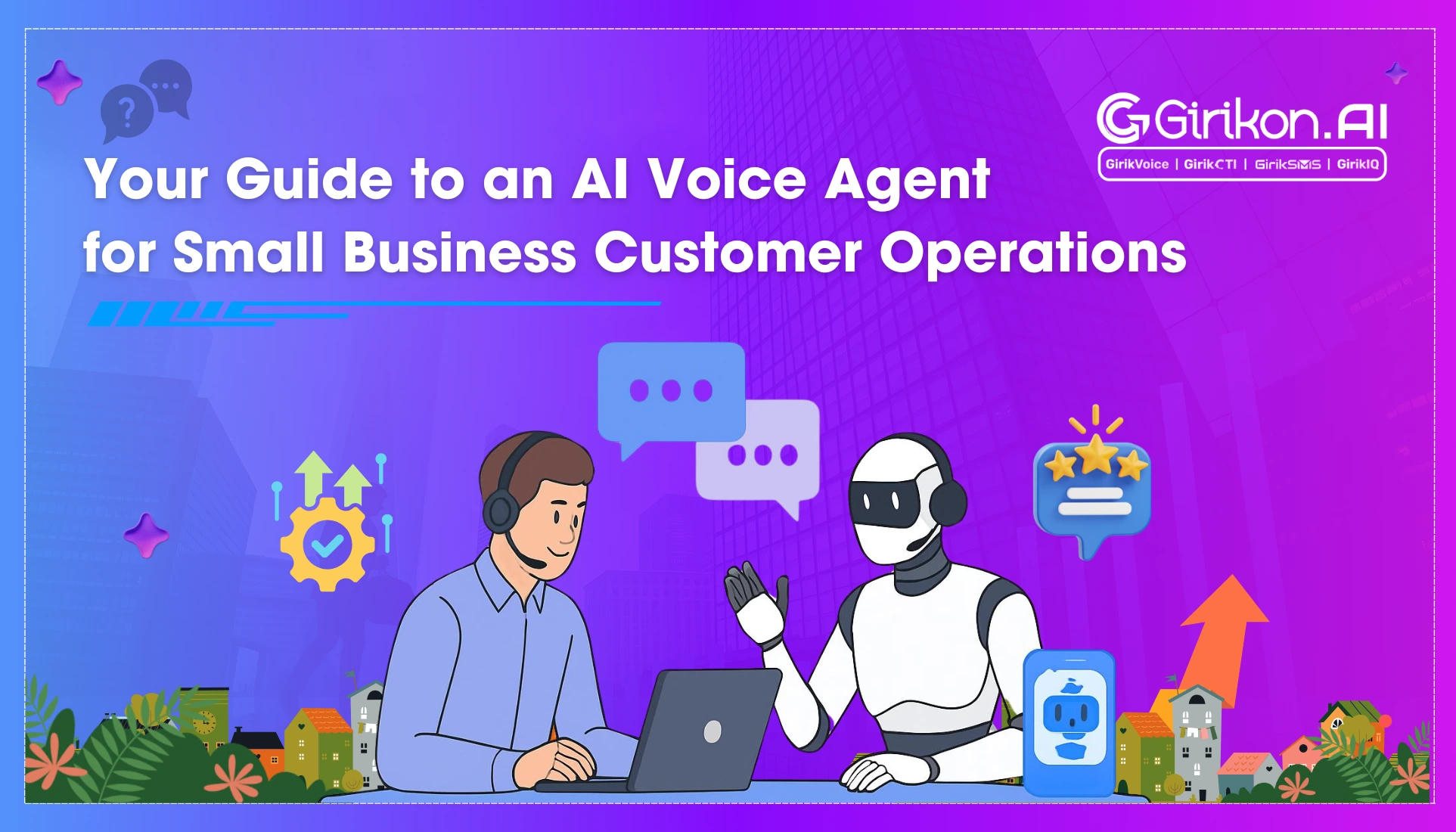
Your Guide to an AI Voice Agent for Small Business Customer Operations
Running a small business is indeed a challenge. You have to wear different hats; sometimes you are a salesperson, operations specialist, and of course, a customer support agent - all at the same time.
Somewhere in the middle of all the mayhem, a customer makes a call for his queries. Some calls get answered, while others might get ignored.
That is why AI voice agents for small businesses are being leveraged to fix these issues — not by replacing your team, but by making sure no customer interaction falls through the cracks. Whether it's answering a call after hours, handling a common support question, or logging the details so your team can follow up, AI voice agents in customer operations are doing the work that used to require an extra hire.
This guide is for small business owners who want to understand what's required to get started — no heavy tech jargon, no enterprise-level assumptions. Just a clear, practical look at how contact center AI automation works, what it takes to set it up, and how to do it in a way that actually sticks.
What are AI Voice Agents, and What Can They Really Do?
When people hear AI voice agents, they often imagine the old automated phones -- the ones that forced you to press 1 for billing, 2 for support and kept on pressing 0 hoping a human would answer.
A 21st century AI voice agent actually talks to you. It actually hears you, understands why you're calling, and responds to advance your interaction, without anyone actually taking your call. Unlike old-school systems, this doesn't go wrong if you're not speaking from a script.
For small businesses, here's where they create a really big impact in customer operations:
Receiving Calls After Office Hours
Customer queries get answered, and the next day the message is sent to the person responsible.
Handling Repetitive or Most Common Asked Questions
Responds to most asked questions, like business hours, pricing, order status, and availability of appointments.
Screening Incoming Sales Leads
Figures out why you're calling, what you need from it and if it's appropriate to call you back to discuss further.
Making Appointments
Checking the team's availability, and making a booking, without any confusing conversations back and forth.
Automated Post-Purchase Customer Service Calls
Taking post-purchase follow-ups, confirmation calls for a booking or follow-up for after a service call, all without using your own employees.
The underlying similarity of each one of these is simple: these are calls with a predictable structure. And this is precisely the kind of interaction that contact center AI automation excels at: taking routine work away so your team can dedicate time to any call that genuinely requires human interaction.
A Step by Step AI Voice Agent Implementation Guide
There is absolutely no need to redesign or rework any of the customer service operations in order to use the AI voice technology.
If you're a small business, the smart way to go about it is through incremental automation and integration with existing communication and customer management processes.
-
1Identify High-Volume Customer InteractionsStart by figuring out which customer conversations occur most frequently and consume most of the time. Examples commonly include:
- Scheduling appointments
- Initial lead qualification calls
- Order status or service inquiries
- Frequently asked question (FAQ) type customer support
- Basic inquiry handling and routing
-
2Define What the AI Voice Agent Should HandleDetermine where automation begins and where human agents should step in before you deploy. Set clear rules like:
- Answering routine questions automatically
- Gathering information from customers during calls
- Transferring complex issues to live agents
- Triggering subsequent follow-up actions when necessary
-
3Connect Voice to CRM and Communication SystemsWhen an AI voice agent has customer context to rely on, it is a much more effective tool than just operating independently. When integrated with your CRM a voice agent can:
- Retrieve customer information during calls
- Automatically log call activities
- Update customer records in real-time
- Route calls based on customer history
-
4Design and Test Conversations in Realistic ContextsConversation design should be based on real customer behaviors-not on an idealized model of how customers ought to behave. Consider testing scenarios such as:
- Customers interrupting the agent's responses
- Incomplete information being provided during calls
- Repeat callers
- Cases requiring escalation to a human agent
-
5Roll Out Automation in StagesDon't attempt to automate all of your customer interactions with AI at all times. Phased rollout could be:
- Phase 1: Automate inbound customer questions
- Phase 2: Add in lead qualification, call routing, etc.
- Phase 3: Enable service notifications and callbacks
- Phase 4: Implement full-fledged contact center operations and processes
-
6Measure Performance and Optimize IterativelyRoll-out and initial implementation doesn't stop the work. Measure your success metrics, which include:
- Call resolution rates
- Average response times
- Customer satisfaction levels
- The rate at which calls are escalated
- Customer conversion rates
For businesses looking to seamlessly connect AI-driven conversations with customer data and communication workflows, solutions like GirikCTI can provide support for a more integrated approach to customer operations by bridging the gap between voice interactions and CRM processes.
The Bottom Line
In the small business context, the customer operations improvement story used to be about hiring more people, extending opening hours, or coping manually with growing call numbers. As customer demands rise, it's challenging to sustain responsiveness without further stressing operations.
AI Voice Agents in Customer Operations offer a tangible evolution away from this trend. By answering routine interactions, accelerating response times, and connecting customer interactions to existing systems, these solutions empower small businesses to deliver better service without adding more operational complexity.
The secret is not to "go big" with automation overnight, but to find the right use cases, implement gradually, and keep iterating based on what works with real customers.
Schedule a free discovery session today to find out how voice agents powered by AI and GirikCTI can contribute to easier customer operations and more meaningful customer conversations.